Should Doctors Give Up?

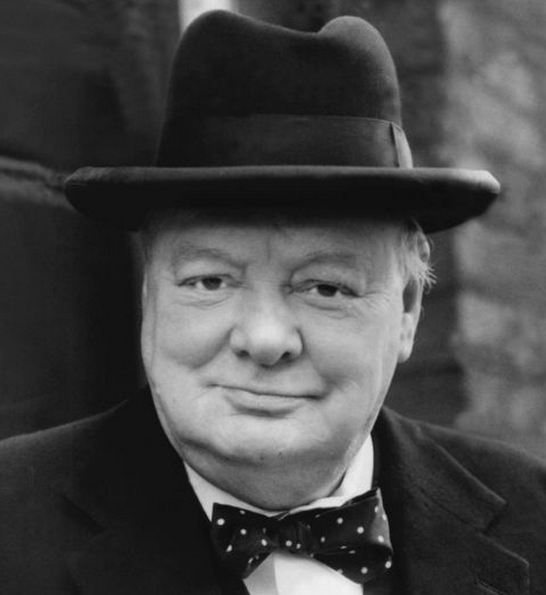
churchill“We will never surrender” echoes as perhaps the most memorable line of Winston Churchill’s “We will fight them on the beaches” speech. It stirred England to fight off an invasion, largely alone.

“Never surrender” resonates with our deepest sense of morality. No one has ever promoted running away in battle as virtuous behaviour in any society.  Falling on one’s sword advises suicide before surrender.  Fans hate hockey teams that give up. We want players to fight to the end even when a goal spread guarantees the outcome. The BBC still runs articles about Japan not surrendering in WWII

Old Barns

On the other hand, only hobby farmers – romantic ruralists – rescue barns canted towards inevitable collapse. Real farmers, ones that have to make their living at it, let old barns fall or pay someone to tear them down. Rotten bovine cathedrals on crumbling foundations represent a nostalgic waste of time and money (based on personal experience). Systems crumble and fall.  Maybe those with enough time to bemoan their passing have too much time to spare?

Sometimes giving up is wise.

Part time

Doctors spend their lives caring for patients, not fighting government. Government has unfettered control over legislation and regulation. They push relentlessly to change and build a system after their own design while doctors work relentlessly caring for patients. Government makes it harder. Politicians don’t want to hear about real problems, like access and coordination of services, only about ideas that make them look good in time for re-election.

A few days ago, we learned of yet another $20 million health innovation evaluation fund.

Note: that’s politicians-as-doctors spending money to grow the size of government instead of loosening the reins to let doctors take care of patients.

A Dark Place

My mother used to repeat, “If you don’t have anything good to say, don’t say it.”

Maybe surrender is the best tactical move for doctors right now? Fighting government requires full time hours. No one has that kind of time, and those hired to do it don’t seem clear on what it is they should resist.

Doctors Give Up

Are we delusional to think doctors haven’t given up on government long ago?

Either way, perhaps we should let Wynne and Hoskins fly forward under the weight of their hubris? Instead of falling on our sword, maybe doctors should just step back and watch what happens? But standing there doing nothing has never been easy for MDs.

photo credit: metro.co.uk

Healthcare Uncertainty Threatens Entire System

DestroyerMoviegoers love watching actors gape in panic. Fear makes people freeze just before they flail in terror.

Ontario faces healthcare uncertainty of superhero proportions. People hate uncertainty in real life. With political unrest, people seek safety and avoid risk. They put projects on hold, limit new debt, and even put off personal milestones like getting married or pregnant.

Uncertainty freezes progress. It stifles innovation and undermines even basic system functions.

Healthcare Uncertainty

Predictions about the negative impact of Premier Wynne’s attack on doctors have already started to show up. Even where patients have not experienced change, they are starting to worry about it.

Patient uncertainty

In my new rural practice, patients often ask, “How long do you plan to stay?” They have seen many others leave. Will this doctor be able to survive and take care of us?

A colleague shared how his elderly parents worry about their rheumatologist retiring. They’ve seen him for years. Who will take care of them when he closes his practice? There’s no one else around.

Staff Uncertainty

At two separate offices I visited, staff asked a bit too hopefully, “Are you going to come and work with us?” They know their jobs depend on physicians having somewhere to work.

Landlord Uncertainty

An MPP called me in a panic, “Four doctors just left our building! That office has been there for 30 years. The pharmacy depends on them. My office is in a unit in the same mall. The landlord doesn’t know what to do. Any suggestions?

Program Uncertainty

  • Palliative Care – 2 years of work at the provincial and national level have been virtually frozen. Yet patients desperately need palliative care.
  • The Medically Complex Patients project started important work for our most vulnerable patients. Where will money come from to continue with a fixed physicians’ services budget?
  • Over 3 million patients currently get enhanced care at Community Health Centres and Family Health Teams. Nearly 10 million patients do not. Will FHTs be expanded as promised? They cost 60% more per patient. Will FHTs be cancelled to save money? How can the government uphold the commitments they’ve already made?

Student Uncertainty

Despite waiting lists, cardiac and other surgeons went unemployed recently. That drove trainees into other fields leaving residency positions open in CV surgery. A heart surgeon told me that it’s already becoming hard to find new surgeons again. Even a few years of students avoiding his speciality has made recruitment worse and promises even longer wait-times for surgery.

New grads have to be extremely careful where they set up practice, if they happen to find a job in Ontario. Even in rural areas, the government could close the hospital like they did in Penatanguishene and promise to do in Midland next door.

Physician Uncertainty

A physician group west of Toronto signed a mortgage on a new building just before Wynne’s cuts.  Their current clinic was beyond repair. The cuts mean they probably cannot afford the mortgage. What now?

Doctors cannot hire new staff, renovate, purchase new equipment or sign new contracts. They’ve no idea how big the promised clawbacks will be.

Expert Advice

In uncertainty, we look to wise advisers. Fortunately, only a few say things like I heard from a couple doctors attending the Ontario Medical Association Council meeting this weekend:

“You get paid well. You should take the cut and be quiet.”

“We need to raise taxes to stimulate the economy.”

More sophisticated advisers say, “We need greater system accountability.” But they usually mean ‘physician’ accountability.

In a system where government is the steward, governor, manager, regulator, funder, negotiator, evaluator, planner, distributor, executioner, paymaster, surveyor, policy-leader, procurement regulator, implementor, vendor…Maybe we need more government accountability?” (M. Lister)

Healthcare Uncertainty on Purpose?

Politicians are smart. Perhaps they want people to act out of fear? Maybe politicians need panic? Maybe they need it to get public support for increased taxes, or to inspire demands for federal health transfers, or to justify taking more control?

A small amount of uncertainty is a fact of life. We take a risk getting out of bed. But we need stability from which to take risks.

Wynne’s bureaucrats demanded fiscal predictability. They bet on cost certainty and sacrificed certainty for everyone else.

Their bond rating was sinking. They’d run out of room in their fiscal lifeboat. Wynne thought she had guaranteed safety by boldly kicking out new graduates to swim on their own. Instead she’s created massive healthcare uncertainty that’s only just starting to surface. Voters love panic at the movies; let’s see what they think of it in healthcare.


Medical Dreams, Doctors & Unionism

GPWe all want free, accessible, high-quality care close to home. Patients want to choose doctors who provide great service and avoid those who do not.

For the most part, doctors want this too. The trouble comes with how to make it happen. It tangles our visions of ideal medical care, politics and doctors’ collective action into a massive challenge with a scary future.

There are 3 parts to the challenge.

  1. Idealized visions stand at opposite ends of a care spectrum.
  2. Politicians craft healthcare solutions along partisan lines.
  3. Doctors collectively respond to the solutions.

Lets start with two visions of medical care:

Medical Dream #1

  • Salaried doctors with pensions and benefits.
  • Standardized visits.
  • Protocol-ized treatment.
  • Maximum decision support.
  • Quality by design.
  • Doctors as clinicians, not managers.
  • Doctors diagnose and treat.

Medical Dream #2

  • Doctors as small business owners.
  • Individualized patient visits.
  • Individualized treatment informed by evidence.
  • Quality by incentives, flexible design.
  • Doctors as professionals in the fullest sense, not solely clinicians.
  • Doctors diagnose, treat, lead, oversee and manage.

Of course, the dreams overlap and blur into dozens of options. Those who support vision 1 tend to believe we should fund it with higher taxes, lower fees for high billing doctors and lower incomes for MDs overall. Vision 1 requires greater government control.

Problems with #1

  • Doctors become clock-watchers attuned to breaks and quitting time.
  • Wait times soar.
  • Not sensitive to individual patient need.
  • Inflexible.
  • Docs see fewer patients; need more docs = higher costs/patient
  • Demoralizing to professionals.
  • Doctors stop thinking and just follow the rules.
  • Removing input makes physicians ignore system issues. Why bother?

Problems with #2

  • What patients want is not always the same as medical need.
  • Many doctors hate business.
  • Might reward cutting corners.
  • Busy doctors earning high incomes inflames public envy.
  • Individualized therapy costs more than guideline-based treatment.

Canadian Compromise

Faced with different medical dreams, politicians work to blend the best of both approaches, slanted toward their political ideal, all in a socialized setting. This compromise works okay when times are good but falls apart under pressure.

Picture a 250 lb. football player and a 100 lb. ballerina as a team in a three-legged race. Inevitably, the brute throws a sweaty arm around his partner to carry or drag her to victory.

As government runs out of money, politicians swing doctors into their bureaucratic axillae to get things done.

As Good as It Got

In many ways, we have lived through healthcare utopia. Medicare used to let doctors work like local grocery store owners, while bureaucrats coordinated supplies and infrastructure. The College of Physicians and Surgeons contented itself with catching the really bad guys and leaving grocers to their vegetables.

Times have changed. Government now wants to run the grocery stores, and the College wants to go through the grocers’ laundry. Brazen reporters demand politicians do their bidding. Politicians click their heels and obey to avoid a drop in public opinion polls.

A Brute of Our Own

In the face of power imbalance, eventually, someone fights back. The ballerinas of the world find their own brutes to team up with the footballers. Ontario’s doctors will do the same.

Police, nurses and teachers’ unions win consistent raises while doctors get 5 years of cuts. Despite tyranny, inefficiency, and entitled greed of some union bosses, many doctors want a bossy, greedy, mercenary union to fight for them. They would love to have union reps fight every little workplace grievance. Doctors want a gorilla to fight all the other (unionized) stakeholders in the system.

Unionism

Public sector unionization rises above 74% in Canada. Political campaign managers estimate 30% of voters are union members. As dependancy ratios continue to creep up, voters will support parties that promise handouts.

A big, fat Ontario Medial Association Union is almost inevitable in this environment. It will flex and bloat and crush everything. It will support governments that wink at big labour with higher taxes. It will shape Ontario’s future, not just for healthcare.

A well-funded union of 35,000 physicians will ensure all change swerves left towards bigger government and more control. Political parties will only win if they kiss big labour. It’s unclear whether this will help healthcare, but maybe it’s what Premier Wynne planned all along?

photo credit: GP Contract Changes May Hit Services, Says Doctors’ Union TheGuardian.com