Faith in Forms Changes Medicine

Still buried in forms.

Clinic walls used to sag with special shelves and trays full of forms. Cupboard doors refused to close as forms refused to stay inside. Extra forms always slipped out onto counters and floors, when you tried to yank one out from the bottom of a pile.

A secretary’s job description included being able to answer: “Where’s the form for the new clinic?”

Last time we looked at forms, I aimed at bureaucrats and the heavy loads they tied on doctors’ backs. It was accurate but not entirely fair. Many physicians (most?) love forms and hide an insufferable desire to bureaucratize.

Thousands of Forms

Computers now store all our old paper forms, plus hundreds and hundreds of new ones—over 1,100 in some cases.

One form is for ordering a CT scan at Southlake Hospital. Another for CTs at Markham.

Anything required outside the clinic needs its own form. Hand-written notes will not do.

Inside hospitals, Pre-Printed Orders multiply forms near infinity.

Forms set the standard of practice for all tests, most treatment protocols, and many referrals.

Doctors started designing their own clinical forms for personal use years ago. It started with simple stamps and templates designed to speed the chore of charting negatives—just paste the same idealized note over and over, while adding positives if necessary.

Today, chart-taking excellence means inserting a scoring tool for every clinical question for which a scoring tool exists. The only thing worse than not using a clinical form is not knowing one exists for the clinical problem at hand.

Does your patient feel depressed? There’s a scoring tool for that.

Anxious? One for that too.

Confused? Forgetful? Out of shape? Look in the forms’ list.

Even if you cannot find a form to fit perfectly, you can tweak the patient history a bit. Everyone will think you much smarter for having used a form.

Redundant Forms?

A dozen different versions of a similar form begs for streamlining.

Pray no one takes notice. An enthusiastic manager might convene a committee to help simplify your forms and propel him up the civil service at the same time. Continue reading “Faith in Forms Changes Medicine”

So Much Nonsense, So Little Time

Image by Ryan McGuire Pixabay

Soon after I started in a small emergency department, the police dragged in a handcuffed teenager.

The teen kicked, spit, and screamed slurred abuse at us. One of his eyes was swollen shut, the other red and dilated. Bloody hair stuck to his face.

Repeat offenders know they will lose a fight with two solid, sober officers. Youths with temper tantrums only know how to kick and scream. Physicians must sort out whether the screaming patient is sick or just uncivilized.

One of my colleagues, ten years my senior, walked over. The handcuffed patient started swearing (eloquently), spitting, and refusing to answer.

After attempting a history and clinical exam, my colleague said, “Buddy … you are messed up!”

trying to think in 2021

COVID19 has been a nightmare of nonsense. We need not review or downplay the carnage.

The public policy response has been brutal in Canada (see COVID Misery Index or the Lowy Institute COVID Performance Index). Get ready for a tsunami of inquiries, reviews, and calls for system change over the next year.

The pandemic has also been a blogger’s nightmare. Before COVID, it was easy enough to show how accepted thinking is often thoughtless. Nonsense abounded. Solutions were often obvious. It just took courage (or stupidity) to speak up.

Nonsense

But “challenging accepted thinking” fails when too many people lose their minds.

You cannot talk to an enraged, drunken teen in handcuffs. Barbarians do not debate governance. Informed consent becomes a charade of formalities.

You cannot reason with an enraged upper-middle-class, ivy league, sociology student. Screaming about oppression, she/he throws a Molotov cocktail at a tiny business owned by an uneducated person who just applied for citizenship.

Critical theory is the end of theory. Relativism means relativism is also relative: to give it meaning is to end meaning; to think it is to end thought.

The pandemic has offered too much nonsense to keep up. You feel like a mosquito in a nudist colony: Where do I start?

Solution

Fools remain foolish without challenge. But the crazier people become the less they are able to consider thoughts outside of their own insanity. Anything falling outside their own minds becomes a trigger, an opportunity for outrage. Debate narrows. Differential diagnoses become a differential of one.

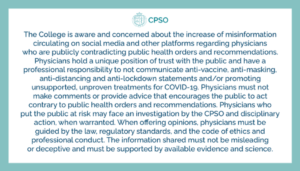
The CPSO—the opposite of crazy—instantiated this ethos in a recent communication. Public health has spoken. Debate must end. We have truth, or near enough, to rule out dissension.

This bothered me deeply—even more so that so many supported it. This is anti-culture. But maybe that was the point all along.

See my op ed:

Patients Need Doctors to Speak Up — Regulator Wants Doctors to Shut Up.

Roots, not Blank Slate

We have to rebuild.

What can we learn from our past? What should we throw out? Radicals follow Rousseau and seek to throw out everything: “Man was born free and everywhere he is in chains.”

Government lacks capacity. It cannot manage major threats.

Society lacks capacity. Work-spend-consume does not develop deep social fabric and understanding required for citizens to lead from below.

Without the knowledge required to demand better decisions from our leaders, we will continue to suffer their ignorance which matches our own.

We need to pivot.

Instead of trying to deconstruct nonsense and offer solutions, perhaps we need to pause and ask ancient questions:

What is true?

What is good?

What is beautiful?

We need to rediscover the art of living well and how it informs civic engagement. If we do not, we all run the risk of becoming (or remaining) messed up: angry youths in handcuffs.


Photo credit: Ryan McGuire Pixabay

Chickens and COVID

Patients get to know their doctors.

Doctors are supposed to know the most, but patients often know as much or more.

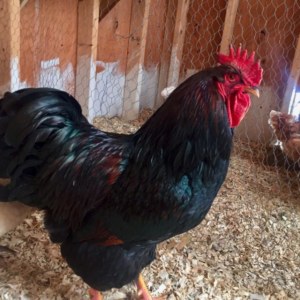
Near the end of every visit, one of my patients asks, “So, do you have chickens yet?”

Cholesterol is boring. Let’s talk about something else. He knows I can’t resist.

Patients learn what their doctors love: chickens, sheep, firewood, lumber, politics and a bunch of other things guaranteed to get me off-track and behind schedule.

A change of expression and tone tell me doctor-talk is done. Forehead wrinkles soften, eyes widen ever-so-slightly, and mouths form tiny smirks.

“So, what’s up with Trudeau anyways?”

I gobble the bait.

Off we rush down a rabbit hole unrelated to cholesterol or colonoscopies. When we finally get back to cholesterol, no debate remains.

“Sure, I’ll try the pill, doc. Maybe see how it goes?”

Someone should study whether off-topic conversation does more to increase compliance than textbook descriptions of therapy.

Most patients already know what they want, especially if it’s the tenth time hearing it. Patients want to skip the science and get to the chickens.

Chickens and COVID

In 2018, ruralism was gaining popularity, with a millennial twist.

Goat yoga, homemade sour dough, and backyard chickens grew almost as fast as TikTok. (Well, almost.)

Discussions about heritage livestock lurked in every corner of social media. Gardens and compost were hipster and cool.

The coronavirus made ruralism viral.

Locked-down anxiety seemed to fuel angry flash mobs. Exhausted by apocalyptic news with nothing left to watch on TV, people turned to happy chickens.

Try this.

Grab a big handful of chicken scratch, throw it in the run, then sit still and watch. Continue reading “Chickens and COVID”