Innovation by Bureaucracy – Patients 1st Paper

zoolanderFads and fashion shape everything, even healthcare.

Politicians love the chance to strut down the runway draped in new policies. No matter how bizarre the outfit, pundit paparazzi chatter with delight.

Innovation is the latest fad.

Everybody talks about it. We all want some. Hospital CEOs need to say something smart about innovation. At the very least, hire a Chief Innovation Officer!

Ontario has the Ontario Health Innovation Council. Americans have the Foundation for Healthcare Innovation.

Organizations stumble over each other to write about innovation:

Innovation Defined

According to Yale, innovation is  “The process of implementing new ideas to create value for an organization.”

The Business Dictionary defines innovation as doing something differently to generate significantly more value. Translating an idea into a good or service that adds value. Inventions are not always innovations.

Harvard Business Review lists 5 Requirements of a Truly Innovative Company HBR 2015

1. Employees that think innovation

2. Clear definition of innovation

3. Comprehensive innovation metrics

4. Accountable and capable innovation leaders

5. Innovation-friendly management processes

A Liberal member of provincial parliament told someone recently that our government wants disruption. They want to disrupt healthcare and see what falls out.

‘Shake things up.’ No plan intended.

Innovation by Bureaucracy

We all play to our strengths and do what we know best. So it’s no surprise that government tries innovation by bureaucracy.

But innovation by bureaucracy is like cooking with crayons.

Bureaucracy exists to give us a sober second thought. It makes us look before leaping. Bureaucracy works as an anti-creativity filter to protect us from attempting something silly.

Government uses innovation by bureaucracy and just increases standardization, rationing, and homogeneity. It cuts spending on healthcare, writes new laws, and increases regulation.

After the Ministry of Health Patient Care Groups report belly-flopped last fall (aka “Price-Baker Report”), the Ministry tweaked their form and made another splash with their Patients First Paper.

The Ontario Medical Association offered an excellent, thoughtful response.  I had a different reaction:

Are You Serious?

No Partnership – The government gave doctors 2 months to respond to a major redesign. TWO MONTHS!  Like tossing pizza dough at the ceiling, they heave major papers at healthcare and see what sticks.

No Contract – The government does this when they should be working out a deal with the doctors. Redesign of medical care probably needs cooperation from doctors, no?

Doctors argue that government has trampled their basic human rights under the Charter: shouldn’t this be settled, first?

Duplicates Bureaucracy – The proposal relies heavily on LHINs and proposes yet another new, ‘sub-LHIN’, bureaucracy.

Do LHINs Even Work? – Why should we give LHINs more authority before the government completes its legislated review? Apparently, they started the review in 2014.

The Auditor General recommended changes to the LHINs, too. Has there been any change?

Patient Choice Ignored – Patients have the right to choose their provider, as outlined in the Health Insurance Act. But Patients First would force patients into practices they did not choose.

Private Businesses Kneeling Before Bureaucrats – The LHINs will ‘engage’ doctors to change medical practice. Doctors operate self-funded offices. They pay their office staff, leases, equipment, etc. out of personal billings. How can doctors run a business with bureaucrats in charge?

Fuzzy Details – Government offered no specifics on the governance of the sub-LHIN model. While they talk about solving inequity of access, it’s a structural problem. Command and control cannot fix access.

Doctors Banned From Leadership – The Local Health Integration Systems Act prohibits doctors from sitting on LHIN boards.

Out of Their League

A recent survey shows that 47% of Ontarians believe government is doing a poor job with healthcare.

This government has buzz but no substance. They are playing in the wrong league. One thousand of the smartest, Rhodes-scholar bureaucrats will never be as smart a 25,000 front-line physicians. That’s math, not hubris.

Innovation starts with government letting professionals do what they do best: help patients. Let doctors innovate. They know what their patients need. Let’s leave fashion to Zoolander and let doctors practice medicine.

photo credit: the first Zoolander movie

PS – Please check out my new book No More Lethal Waits: 10 Steps to Transform Canada’s Emergency Departments on Amazon. Thanks!
Change Scheduling to Meet Patient Needs More Efficiently

Scheduling to meet patient needsNobody is average. No day is average.

A statistician drowned walking across a river with an average depth of 2 feet.

Average harms patients.

When emergency departments are understaffed, patients wait. When departments are overstaffed, costs go up.

This post touches on material in Step 5 from No More Lethal Waits: 10 Steps to Transform Canada’s Emergency Departments.

In Step 2, we said to Close the Waiting Room; bring everybody inside. If EDs do this, staff will feel every surge in patient volumes.

It will create chaos, if you do not match physician scheduling to hourly changes in patient volumes. Staffing levels need to swing up and down with changes in patient volume.

High-end restaurants solved this long ago. If an evening gets busy, restaurants call in more staff. If it is slow, waiters go home early. Restaurants schedule staff based on how fast each waiter works.

To use this thinking in the ED, schedulers have to tackle clinical speed and the traditional LEGO block approach to scheduling. Check out Schedule 4 Patient Flow and Efficiency to see how.

 Schedule Trilemma

Scheduling frustrates some of the smartest people, when they ignore the schedule trilemma.

A trilemma offers 3 options such that only 2 of the 3 can be true at the same time.

One classic trilemma asks you to pick 2 of the following 3 options: better, faster, cheaper. If you want better and faster, then it won’t be cheaper. If you want faster and cheaper, then it won’t be better. And so on…

A humourous Soviet era trilemma asks you to pick 2 of the following 3: communist, honest, smart. You can be communist and honest, but you won’t be smart. And so on….

The schedule trilemma asks us to pick 2 of the following: efficiency/MD productivity, short patient waits, rigid shifts.

If you want to keep physicians productive and have rigid start and stop times for your shifts, then patients must always be waiting so that physicians are never idle.

If you want short wait times and rigid shifts, then you need to over-staff your department so that there’s always an MD ready to see patients, even during the biggest surge in patient volumes.

But if you want efficiency and short patient waits, then you must not have rigid shifts; you need flexible start and stop times.

We need flexible shifts to maximize efficiency and decrease patient waits.

Scheduling to Meet Patient Needs

  1. Determine the speed each physician works
  1. Estimate total volumes
  1. Let physicians pick their shifts
  1. Each MD should choose 50% more shifts than they want to work
  1. Use number 1 – 3 to create the schedule
  1. Assign approximate start and stop times

We’ll look at how to operationalize this in the next post.

Check out this interview with Dr. Marko Duic, the brains behind this scheduling approach.   The interview touches on the mechanics which we will expand in the next post: Step 6 – Give MDs Responsibility for Flow and Hire Patient Navigators.

I hope this gives you a little taste of the process advice from the book. Check out No More Lethal Waits for more.


Use Chairs and Exam Tables, Not Stretchers

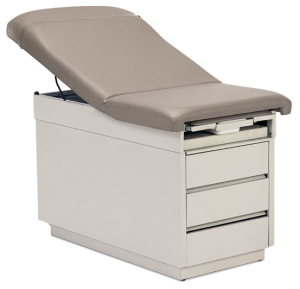
standard-manual-exam-table-largeIf patients can sit in chairs for hours in the waiting room, then they can sit in chairs inside the emergency department.

Only the very sickest patients should get defined care spaces with stretchers.

Over 85% of emergency patients get sent home.  They do not need stretchers. Even some patients who need admission do not need a stretcher.

Keep vertical patients vertical and moving.

Emergency departments will never excel with the wrong furniture.

This post/podcast highlights the key ideas from Step 4 in my book: No More Lethal Waits: 10 Steps to Transform Canada’s Emergency Departments.

Use Chairs and Exam Tables, Not Stretchers

Stretchers can be numbered. They are finite, ‘safe’, mobile, and locatable. Stretchers foster rigid thinking. They support rigid nurse to patient ratios.

Stretchers attract admitted patients like watermelons produce fruit flies the next day.

Physical exams should occur on exam tables, in private. Patients can sit in chairs with their IVs. They can shuttle off to x-rays, or wait for blood work, from chairs.

You do not need to force patients into stretchers. Even patients with chest pain can spend most of their time in the ED on a chair.

Exam tables

  • do not have wheels, so you cannot move patients around on them.
  • have paper, not sheets, so physicians can change an exam table quickly without waiting for house cleaning.
  • have no sides making it unsafe for patients to stay on them unattended.
  • have hard surfaces that make them uncomfortable beyond brief exams.

Admitted patients cannot be admitted on to a exam table.

Exam tables are never full. They are a shared resource, whereas patients ‘own’ their stretcher for the whole ED visit.

Exam tables force patients to get up and move.

Exam tables are like operating room tables. No one ever admits a patient to an operating room table. OR tables are used only when staff are present.

Stretchers attract admitted patients, act like real estate, encourage patients to remain immobile, and allow patients to be tucked in safe and sound.

Emergency departments need exam tables everywhere, not just in the fast track/minor treatment areas.

Mental Furniture

Emergency departments need the right mental furniture.

Inpatient thinking harms patients.

On the wards, delay is good; waiting often helps patients get better.

  • Sick patients want extra time.
  • It’s compassionate and polite to go slowly.
  • Waiting for tomorrow never causes harm.
  • Sending people home just creates more work.
  • Hasty decisions are often wrong.
  • Delay rarely kills a patient after a diagnosis has been made.

But it’s opposite in EM care.

  • Delay harms patients.
  • Decreased length of stay (sending patients home) decreases work.
  • Spending 40 minutes on compassionate care, or counselling, robs clinical services from people waiting for care.

Teams need an attitude of ‘get it done now’.

They need to pursue quality, capacity, and service in a way that fits with an emergency medicine mindset.

We need to be radically committed to service.

Emergency providers are always on, in the spotlight. We need to treat diaper rashes with as much sensitivity as trauma.

Patients determine the validity of a complaint, not providers.

There are no undeserving patients.

If teams are allowed to consider some patient concerns as minor, or a reflection of poor self care, it will poison the attitude required to serve.

We need to lose our arrogance and stoop to help every time.

You will find more in the book, but this gives a sense of Step 4 – Use Chairs and Exam Table, Not Stretchers, in No More Lethal Waits: 10 Steps to Transform Canada’s Emergency Departments.

photo credit: hamiltonmed.com