

Less Rules = Better Patient Service: 23 Ways Over-Regulation Hurts

WestJet-LogoWestJet Airlines built their reputation breaking rules to improve customer experience.  The  Christmas Miracle video went viral showing WestJet staff run around buying Christmas gifts for travellers based on wishes they made as they boarded.  Travellers got their wishes when they landed, and WestJet got famous.  No rulebook could lay out the performance needed for the Christmas Miracle.

Medicare stands at the other end of the customer service spectrum.  Over-regulation makes outstanding customer service all but impossible. Here’s how.

Regulation decreases quality.

Rules stop staff from thinking.

Rules mandate a one-size-fits-all approach to individual patients.

Regulation doesn’t keep pace with progress.

Regulators rarely know the job like front line workers.

Regulation impoverishes decision-making.

Thick rulebooks make staff hesitate, or freeze with indecision.

Rules are open to interpretation.

Rules never account for every possibility.

People can’t remember all the rules.

Rulebooks get long and cumbersome.

Regulation is expensive.

It requires hordes of managers to enforce.

Rules take hours to maintain…at huge cost.

Rules are costly to produce.

Regulation crushes ingenuity and personal effort.

Provider effort withers with command and control rules.

You can’t regulate innovation.

Regulation undermines leadership.

Top-down edicts to front-line workers don’t influence change.

Regulation assumes an air of infallibility and certitude.

Who decides which new regulations to adopt?

Regulations are complicated, but life is complex.

Healthcare should define great customer service, but it never will as long as it’s over-regulated.  What can we learn from WestJet about customer service?
Canada’s Hospitals, NOT Canada’s ERs, missing mark on waiting times, new statistics reveal – The Globe and Mail

The Globe and Mail missed the mark.  Hospitals, NOT Emergency Departments (EDs), leave patients in overcrowded EDs for nearly 30 hours before moving them to an inpatient bed.   EDs do not make admitted patients spend too long in the ED.  Hospitals do.  Hospitals could empty EDs of admitted patients at any time, if they wanted to.

Canada’s ERs missing mark on waiting times, new statistics reveal – The Globe and Mail.

Hospitals choose to leave 15 extra patients admitted in the ED; they could spread them out over all the inpatient wards.  Few hospitals enter the political battle of angering unions by placing extra patients on inpatient hallways, despite the nearly 400 articles published showing that mortality and morbidity increase for every hour admitted patients get warehoused in EDs.

Full Capacity Protocols empty EDs, have been used in Canada, and leave no excuse for exposing patients to the proven risks of long waits in the ED.

When will government change incentives so that hospitals start emptying EDs?


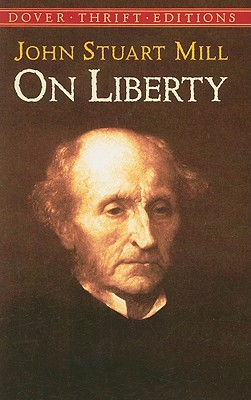
Medicare Without Debate Will Fail, From JS Mill

On-Liberty-Mill-John-Stuart-9780486421308We weaken Medicare by refusing to debate it.  When’s the last time you saw opposite opinions on healthcare presented fairly, without bias?  Silencing contrarians does not protect our system. Suppression of opinion creates thoughtless prejudice.

JS Mill gave 3 reasons to stop suppressing debate in, On Liberty, 1859.

1. Suppressed opinion might be true.

“The opinion which it is attempted to suppress by authority may possibly be true.”

“All silencing of discussion is an assumption of infallibility.”

2. Refuting contrary opinion reveals truth.

“Complete liberty of contradicting and disproving our opinion is the very condition which justifies us in assuming its truth for purposes of action…”

“Truth gains more even by the errors of one who, with due study and preparation, thinks for himself than by the true opinions of those who only hold them because they do not suffer themselves to think.”

“The fatal tendency of mankind to leave off thinking about a thing when it is no longer doubtful is the cause of half their errors.  A contemporary author has well spoken of ‘the deep slumber of a decided opinion.'”

3. All conflicting opinion holds some truth.

“…Conflicting doctrines, instead of being one true and the other false, share the truth between them, and the conforming opinion is needed to supply the remainder of the truth of which the received doctrine embodies only a part.”

“Truth, in the great practical concerns of life, is so much a question of the reconciling and combining of opposites that very few have minds sufficiently capacious and impartial to make the adjustment with an approach to correctness, and it has to be made by the rough process of a struggle between combatants fighting under hostile banners….”

“Not the violent conflict between parts of the truth, but the quiet suppression of half of it, is the formidable evil; there is always hope when people are forced to listen to both sides; it is when they attend only to one that errors harden into prejudices, and truth itself ceases to have the effect of truth by being exaggerated into falsehood.”

Mill makes a final point: “…truth; unless it is suffered to be, and actually is, vigorously and earnestly contested, it will, by most of those who receive it, be held in the manner of a prejudice, with little comprehension or feeling of its rational grounds.

Silence

Politicians fear losing votes, providers fear losing their jobs (or promotions), and voters fear losing medical insurance by allowing debate on Medicare.  With Medicare using 50% of tax dollars and growing at 6.5% per year, will this change before it’s too late?


(photo credit: images.betterworldbooks.com)