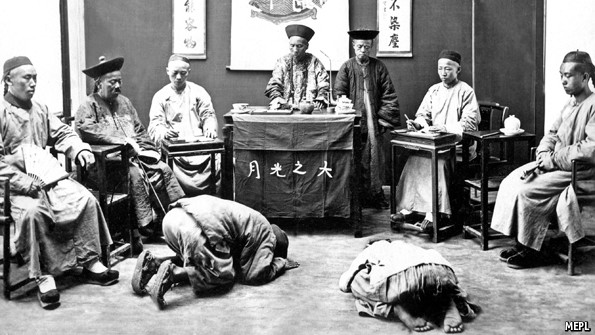
Doctors Kowtow to be Included

kowtowMost rulers love popular advice, not honest criticism. Popular advice mixes two parts flattery plus one part suspicion plus 3 parts repeat-what-the-ruler-already-said using your own words. Great rulers despise it.

Medicare almost never has great rulers. Most politicians like to hear experts that congratulate accomplishments (flattery), question doctors’ motives (suspicion) and decorate party platforms with voice-overs from academics.

Doctors must learn to kowtow or get ignored by government. When clinics struggle to pay office staff, doctors must hold their nose, bite their tongues and offer popular advice. Doctors must kowtow to politicians to be included or face being left out of healthcare with left-overs.

Doctors Kowtow

Politicians and bureaucrats enjoy life when they don’t have to waste time engaging doctors. Whether it’s Health Links or Primary Care reform, government has a long resume of coming up with grand solutions, excluding doctors by design.

“You’d better be on the agenda or you’ll be on the menu!” Experts advise.

Do physicians compromise to get on the agenda? Do they avoid speaking out against inefficiency, waste or injustice?

Too often, doctors keep quiet to get included in a process. They reason it’s better to keep quiet about injustice than risk being thrown out of the inner circle.

Workers vs. Stakeholders

In successful businesses, workers speak up to improve operations. Employees risk their jobs if they keep quiet about waste or inefficiency. Companies must innovate or lose out to competitors who do.

In nationalized monopolies, workers speak up as citizens to improve their own lot and the interests of the stakeholders they represent. Stakeholders risk their lunch invitations to Queen’s Park if they speak out about waste or inefficiency. A nationalized monopoly does not need to innovate. It cannot lose.

Whine vs. Challenge?

At every level, Canadian healthcare encourages kowtowing and whining instead of rigorous challenge. Everyone tends to support the party line for fear of being left out of the political process. Ultra-sensitive to voter opinion, politicians would rather hear popular advice and keep their public image untarnished than hear rigorous challenge and risk re-election.

Now, more than ever before, Medicare needs doctors to be recklessly honest. Yes, reckless. Ontario’s doctors have nothing to lose right now, and patients have everything to gain. As things get worse for patients from Wynne’s cuts and underfunding, voters will lash out at government and doctors. They will demand to know why doctors didn’t speak up about mismanagement. They will despise doctors’ attempts to placate politicians.

If political rulers truly care about Medicare, they will welcome critique from outside groups. They will detest popular advice and flattery. They will refuse to listen when doctors kowtow, and doctors will refuse to try.

photo credit: economist.com

Usurpation in Medicare

MagnaCarta2The strong steal from the weak: kings from nobles, Castro from Cubans, and Premier Wynne from Ontario’s doctors. English barons wrote the Magna Carta because King John acted like Premier Wynne, a law unto herself.

Magna Carta – “the greatest constitutional document of all times – the foundation of the freedom of the individual against the arbitrary authority of the despot”.

 In fairness, Wynne attacked because no law said she couldn’t. In fact, previous governments did the same thing in the 1990’s social contract years with clawbacks and caps that forced doctors to work for free.

A specialist asked me, “So government can cut us, we have no way to fight back and it’s illegal to bill outside of OHIP. Isn’t that Communism or something?

Throughout history, governments have stolen power and property – usurped – from their citizens. Tyranny and usurpation still drive immigration. Most Canadians have relatives who fled political tyranny for freedom.

Canadian democracy stands on the rule of law. We answer to the law, not the capricious whims of monarchy or government. And where there is no law, Canadians behave by principles like honour your commitments, deal fairly and tell the truth.

Usurpation in Medicare

Medicare was once an insurance plan. Now it’s an example of government imposing itself on others. In the late 1960s, Medicare simply replaced a few large health insurance companies. Ostensibly, a national plan guaranteed coverage for all citizens and promised administrative savings.

In the glory days of Canadian Medicare, doctors worked and governments paid. But policy experts tickled political ears with whispers of a more robust social utopia, a full-blown, centrally controlled healthcare system.

Social designers had to wait for Medicare to become a national icon before they took control. By the 1980s politicians had what they needed and moved in. Doctors were pushed out and have been blamed for almost everything wrong in Medicare ever since.

How to Usurp and Get Away with It

Aside from a few historic exceptions, whenever doctors organize serious resistance, government pays them off. Docs always settle for less than they wanted; passion fades quickly. Myths about pendulums swinging or cycles of plenty and famine usually turn doctors back to their knitting. They hardly notice that fees are now only 50% of 1970 levels. Citizens tolerate usurpation in small slices over time.

Wynne got greedy and went for a big slice. Her plans cut over 20% from doctors’ net earning by 2017. Incomes have plummeted since 2012 such that by 2017 doctors will have lost 30% of their net in 2012 dollars. Wynne’s usurpation will fail.

Representation Rights

Doctors have had zero protection from usurpation by government for the last 45 years. They cannot strike. They cannot earn income practicing medicine outside OHIP.

For the first time in 4 decades of state healthcare, government acquiesced and promised in legislation to ‘negotiate’ before legislating fees. But even with representation rights, government ’negotiated’ for a whole year and then legislated what they had offered on day one of ‘negotiations’: a rigid cap on total spending for MD services.

How to Win Enemies

Many blame political oppression for terrorism. At the very least, tyranny and usurpation inflames hatred of government and its policies.

Medicare runs on doctors’ cooperation with government. Doctors will never riot or terrorize. But do politicians really believe that Medicare has any hope of survival when they treat physicians with disdain?

When government usurps too aggressively, it starts revolution. Wynne has created a small pack of doctors determined to revolutionize healthcare. Once committed to action, they will not distract easily.

Wynne gambled that doctors never fight back. But some do. I think she might have gambled wrong.

photo credit: magnacarta800th.com

Doctors Should Lead Medicine, Not Politicians

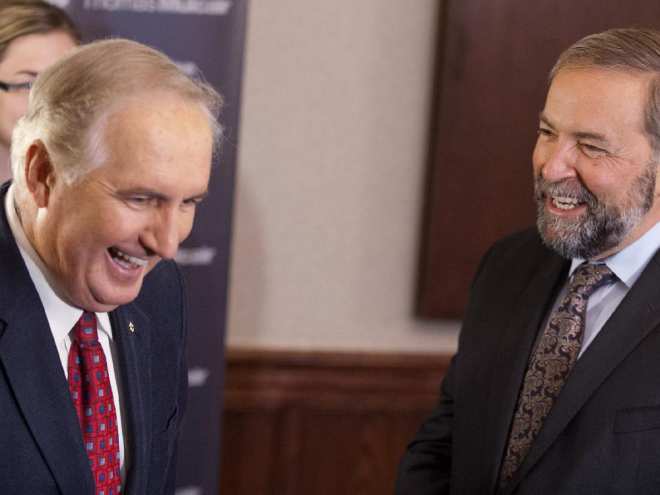
roy-romanow thomas-mulcairIf you follow health news, one thing is clear. We must never ask a doctor how to fix healthcare. MDs say strange things about patients and medical supplies that do not sound like system-speak. Therefore, they must be mistaken, biased or arrogant.

Dozens of articles prove that doctors do not even follow guidelines.  If we listen to media and politicians, we might wonder whether doctors know how to practice medicine at all. Physicians are the last people with ideas to improve medical services.

Even so, the Ontario Liberals found a doc who’s practiced everywhere except Canada to promote their grand design. Only he can be trusted. He knows.

Solutions

Everyone has ideas about Medicare, but no one says doctors should lead.

The Conference Board of Canada suggests we need family health teams, IT, pay for outcomes, more elder care and focus on prevention. Others say doctors should just stop over-prescribing. One group thinks we might try to cut care at end of life. Another tells us to build care networks.  And nurses want more power, and more nurses.

Americans print their own solutions: Harvard Business Review,  Wall Street Journal. The WSJ article puts one paragraph at the end about physicians setting rules for care, but that’s it. Organizations like the Institute for Healthcare Improvement seem to agree.

Canadian Experts on Healthcare

Canadians trust Roy Rowmanow when he talks about changes to healthcare. A lawyer and former NDP Premier of Saskatchewan, Romanow carries more weight than any physician. Maybe it rubbed off of Tommy Douglas, another former NDP Premier of Saskatchewan, who held social views that most of us shun.

Would lawyers ever accept a physician as the national expert on the legal system? Would dentists accept pontifications about dentistry from medical docs?

Doctors Should Lead Medicine

Physician organizations should directly advocate for physician leadership and sharply critique system mismanagement. Here are previous posts on this theme:

Leadership: Who’s in Charge of Medicare? (Not doctors!)

Myth: Physicians Lead Medicare

Over-Regulated Medicare Stifles Innovation

Canadian Chaos: Medicare’s Misaligned Incentives

How to Fix Medicare: If Publicly Funded, Then Privately Run

Medical Anarchy, Mindful Structure

Quality Care Requires Freedom

Healthcare Control Using Fear

Inexperienced Experts

Why Medicare Fails

Physicians must speak up. They know how to fix healthcare. Doctors need to figure out how they want things to change and then advocate strongly.

Doctors should lead medicine, not politicians. Not bureaucrats. Not nurses. Not lawyers.

Patients expect that dentists lead dentistry and lawyers lead the judiciary. Doctors must fight to regain the leadership they’ve lost. Patients deserve no less.

photo credit: ottawacitizen.com