

Doctors’ Guilt About Income Harms Patients

guiltMost docs love to work; they find patient care fulfilling. Many can’t believe they get paid for the privilege of helping patients.

Many of us would work for free.

Seriously.

Talk about money or income makes most doctors squirm. We have jobs we love and higher than average incomes. We forget the sacrifice of training.

Politicians and media know this. Like lion trainers with whips, journalists make doctors cower by whipping out a headline about incomes.

Personal Incomes, Patient Needs

Doctors conflate their personal incomes with patient services. They know patients wait, and that the province is short of money. Ergo, if only doctors took a cut in personal incomes, then patient services would improve. But they’re confused.

The schedule of benefits – the fees that physicians get paid – does not exist because government likes doctors. It does not exist to pad physicians’ incomes. The schedule is designed to drive physician behaviour towards meeting patient needs.

Fees Fix Care Problems

Unmet medical need creates demand for new fees or adjustment to old ones. A new fee drives physicians to change behaviour to meet the need defined in the fee code. If you cut a particular fee, physicians’ behaviours change to service other, equally pressing, medical concerns.

For example, attaching a bonus for Family Docs to accept unattached complex patients after discharge from hospital makes it easier for these patients to find Family Docs. Everything doctors do relates to helping patients. All things being equal, doctors will provide care that the government promotes with higher fees, regardless of physicians’ individual altruism.

The MOH-OMA negotiations are about patient needs and how best to meet them, not individual MD incomes.

Fees and Access

Economists teach that prices impact supply. When supply drops, prices increase.  If the government fixes a low price, supply decreases.

For example, over the years government slashed fees for community doctors doing hospital work. Guess what? Almost no community doctors spend a significant part of their day doing hospital work anymore.

You can decrease price and in the short run people will still be able to access services. But very soon, supply and/or quality will decrease.

Doctors and Privilege

Privilege relates to more than just income. Society honours physicians, to varying degrees, with respect, deference and a degree of autonomy. Patients do not begrudge what their doctor earns when they are sick themselves.

Society does not privilege doctors only out of the goodness of its collective heart.

People know that if they want some of the strongest students to sacrifice their youth in medical training, society needs to value the sacrifice. Students must be attracted into training.

When governments and media attack doctors and slander them as greedy, when patients look on doctors as undeserving recipients of their tax dollars, and when politicians arbitrarily slash doctors’ fees, our best students change their minds.

For example, before primary care reform, dozens of residency positions in family medicine went unfilled. Students looked to any other field besides family medicine. Society communicated that it did not value primary care. Only after major funding reforms in the early 2000s did students return to family medicine residencies. Now residencies are all full, for now.

Patient Needs Before Doctors’ Guilt

Physicians must not focus on their own squeamishness about money. They need to focus only on patient needs.

Doctors must put their sympathies with patients ahead of government budgets.  We need to focus on how to convince the government to fund solutions for patient care.

Physicians, please don’t let the media suck you in to thinking this is about your income. It’s not. It never was. It has always been, and must continue to be, about patient care.

photo credit: businessnewsdaily.com
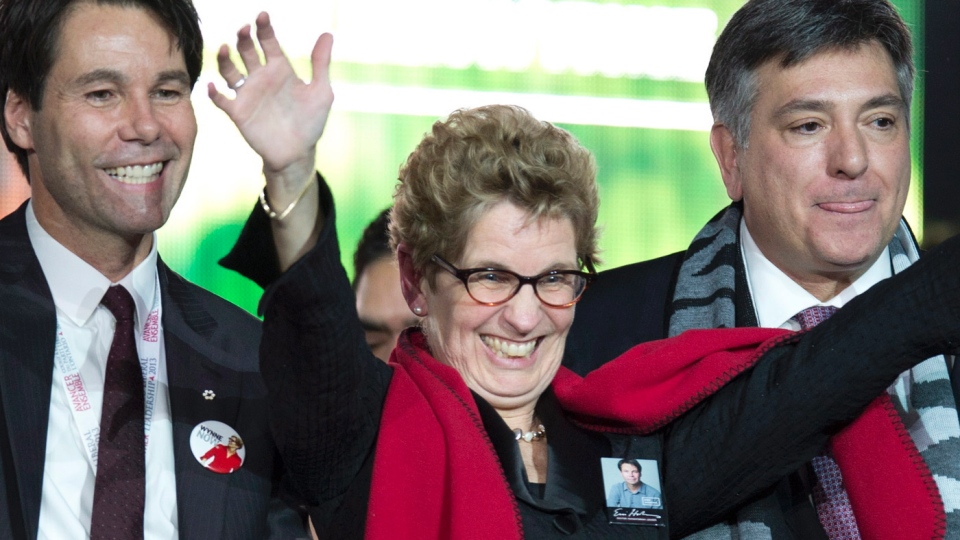
Wynne Attacks Doctors, Punishes Patients

WynOntario has a $300 billion debt (Ontario Debt Clock). Let’s ignore how we got there.

Everyone calls for system change. Everyone.  Even Medicare zealots want change.

Wynne got a majority government. Let’s ignore how she got it (bought it?).

Wouldn’t this be a great opportunity for real change? Might this be a great time to solve problems with access, quality and service for patients?

Instead, Wynne and Hoskins use their majority government to attack doctors, again. Because they can.

Change Requires Different, Not More

We could buy a better system by changing the way we spend taxes. Dozens of people have written about it. High needs patients, system integration and acuity modifiers for older, sicker patients offer a few critical places to start.

Fee increases vs. Population increases

Doctors do NOT ask for higher fees.  Doctor do NOT want more money for doing the same work. They offered 0% fee increases for two years. 0%! They just don’t want more cuts. They already agreed to cuts in 2012 and 2013.

Doctors want the government to pay for growth.

NOT growth in doctors’ fees. Growth in patient volumes. New babies need care. Immigrants and an aging population increase the volume of services required in Ontario.  New doctors provide that care. Or current doctors work harder. Hoskins refuses to pay for it. He calls it a raise to pay doctors’ fees for seeing more patients.

When is a cut not a raise?

What would you call the following?

  • You ask your staff to work more for less pay. Is that a cut?
  • You pay hospitals the same to see more patients. Is that a cut?
  • What if you pay your staff 10% more to do 20% more work? Is that a cut?
  • What if you cut the budget, underfund growth and slash-or-cancel programs for new graduates, unattached patients, continuing education, hospital on-call and more? Is that a cut?

Democracy and Law

What kind of government creates a state monopoly, then makes it illegal for 35,000 professionals to work outside the monopoly, then slashes the fees it pays for services provided?

Is this democracy? Is it something else?

Wynne Attacks Doctors and Punishes Patients

Politicians attack who they can and coddle who they must. All that matters is immediate public sentiment. Do voters believe doctors have enough?

  • Who cares if doctors hire staff and pay overhead?
  • Who cares about student debt?
  • Who cares about 12 years of university?
  • Who cares if it takes decades to catch up to friends who chose a different career.
    • You chose that career!
  • Who cares about job stress — everyone is stressed.
  • Doctors earn $250 thousand dollars after overhead!

Jealousy: wanting what other people have while being ignorant of the sacrifice required to get it.

Fees drive physician behaviour. Voters don’t see that. Even the most altruistic doctor spends less time with you as a patient if she can only bill OHIP $33 for the visit.  What happens if you need 45 minutes? You get less service or cannot find a physician at all.

What Next?

Doctors will keep seeing patients. They will grumble, but life will go on.

Eventually one of the last two state healthcare monopolies — North Korea and Canada — will wake up and admit that government monopolies hurt patients. They harm patients because they run out of money and get sloppy with management. Every other country in the world has admitted it.  Even Sweden believes state monopolies harm patients.  Communist Cuba used to stand with us. Now it’s just us and North Korea.

Dark Times Call for Great Leaders

We look to great leaders for direction in tough times. Maybe Wynne and Hoskins might quote a hero:

“There is no such thing as an absolutely hopeless situation.”

Vladimir Lenin in reference to capitalism

photo credit: cp24.com

Free Speech in Hospitals?

Truth or consequencesThe terror in Paris settled quickly but will flare again. Some people hate freedom and democracy. Some people believe they have a duty to punish those who say things they do not like.

Just as talk shows ran out of content, another hostage crisis erupted. Pundits comment and debate the slaughter. One theme focuses on freedom and the limits of expression in a free society.

Hospital workers also wrestle with free speech. What can they say without getting into trouble? Do they have a duty to report? Will they be protected if they hold an unpopular opinion?

In a time of universal deceit, telling the truth is a revolutionary act. George Orwell

Free Speech in Hospitals

In healthcare, ‘speaking up’ usually focuses on whistleblowing:

But can healthcare providers speak out on anything else? Should they?

Currying Favour with Politicians

Just after training, I wrote a letter to the editor about overcrowding in emergency departments. I asked the Minister of Health if he really knew what he was talking about. I invited him into our ED at “—Blank— Hospital” to see overcrowding for himself, to experience it firsthand.

My CEO blew up. He sicced the Chief of Staff on me. Then the President of the Medical Staff Association preached, “Never, ever, ever mention the name of the hospital in the media.”

My department chief said he agreed with my letter, thanked me for writing it and asked me to never do it again, ever.

Hospitals fight over one pot of tax dollars in Medicare. Thus, hospitals must never embarrass their political benefactors. Hospitals can lose project funding because one politician got their image tarnished. Image determines re-election, the most important political concern.

The public pays for hospital administrators to spend hours and hours in dozens of meetings worrying about “the media” or “the union bus getting parked outside” or a letter of complaint copied to the local MPP and hospital CEO. Dozens of meetings!  In a way, administrators care about public image just as much as politicians.

Free Speech Fallacy

Those who know cannot speak.

Those at the coal face often know frontline problems better than CEOs, bureaucrats or journalists. But they cannot speak. If they do, they get in trouble, lose positions or promotions, and might get fired. Even worse, they might make work much harder for colleagues. Is this free speech?

Rules of “Free Speech”

Publish accolades and praise without fear. But if you have less than glowing comments, do not identify:

  • your organization.
  • an individual by name.
  • specifics of a bad outcome you report.

Never comment on

  • concerns about safety.
  • decisions made by organizations you work for.
  • details about religion, race, sex or any specific identifier even if central to an issue.

Some topics attract more pain and suffering than others.  Avoid big labour, organizational movements and any hint of being politically incorrect. If you do, expect to be shouted down, punished and written off.

Is Free Speech in Hospitals Dead?

What if you’re an idealist? What if you can’t help but speak truth to power?

Go ahead; be an idealist. Talk about rates of this or that terrible thing; talk about ineffective efforts to improve X, Y or Z. (Yes, I’m too chicken to mention specifics!) Say it gently, kindly.

You might be in big trouble or out of work tomorrow. Another martyr for free speech.

photo credit: anonymousartofrevolution.com