 The need to help animates healthcare. We see a need and work to meet it.
Disparities in health outcomes resonate deeply with us.
The cholera outbreak in London offered clear disparity and a tangible solution. Poor infant and child health in (some) Northern communities offers disparity with no obvious answer.
A solution requires a clearly defined problem. Does anyone know what health equity, inequity or disparity means exactly? Is it something that we know but cannot easily define, like the Caucus-race from Alice in Wonderland?
First [the Dodo] marked out a race-course, in a sort of circle, (`the exact shape doesn’t matter,’ it said,) and then all the party were placed along the course, here and there. There was no `One, two, three, and away,’ but they began running when they liked, and left off when they liked, so that it was not easy to know when the race was over.
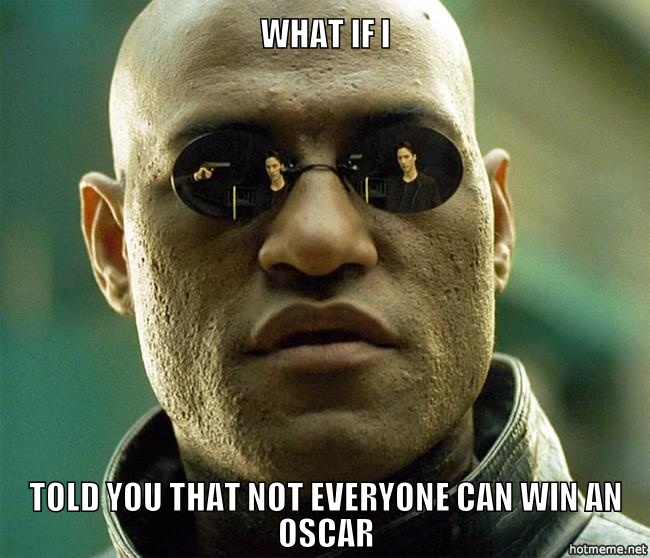
However, when they had been running half an hour or so…the Dodo suddenly called out `The race is over!’ and they all crowded round it, panting, and asking, `But who has won?’
This question the Dodo could not answer without a great deal of thought, and it sat for a long time with one finger pressed upon its forehead (the position in which you usually see Shakespeare, in the pictures of him), while the rest waited in silence. At last the Dodo said, `Everybody has won, and all must have prizes.’
Health Equity Defined
Health equity has become the cardinal virtue in many policy discussions. We hear impassioned calls to address it. No action is too outrageous so long as it furthers our goal of health equity and equality overall.
What is health equity?
- Equality – everyone gets the same pair of shoes.
- Equity – everyone gets a pair of shoes that fits.
An academic definition (BMJ):
“Equity means social justice or fairness; it is an ethical concept, grounded in principles of distributive justice…
Equity in health means equal opportunity to be healthy, for all population groups. Equity in health thus implies that resources are distributed and processes are designed in ways most likely to move toward equalising the health outcomes of disadvantaged social groups with the outcomes of their more advantaged counterparts. This refers to the distribution and design not only of health care resources and programmes, but of all resources, policies, and programmes that play an important part in shaping health, many of which are outside the immediate control of the health sector.”
One site says
“Once everyone enjoys a similar level of health and well-being, we can focus on preserving fairness by giving everyone the same things: this is equality. As the Pan-American Health Organization puts it, equity is the means, equality is the outcome.”
If you have time, check out Maxwell Smith’s (Toronto) lecture: What do we Mean by Health Equity in Public Health?: Assumptions and Theoretical Commitments
Dozens of issues including: genetic predisposition, epidemiological hazards, environmental hazards, geographical factors, work conditions, political or social marginalization or oppression, other social/societal determinants?
“Equity in health implies that ideally everyone should have a fair opportunity to attain their full health potential and, more pragmatically, that no one should be disadvantaged from achieving this potential, if it can be avoided.” Whitehead, 1992, pg. 7
Maxwell tackles strict egalitarianism (equal income, equal healthcare resources, liberty and health) vs. prioritarianism vs. sufficientarianism. He mentions equality of opportunity, resources, well-being, self esteem, knowledge, self determination…
A sense emerges that health inequity is a disparity in health thought to be due to differences in social advantage. Adherents seem to believe health inequity causes poor health if you belong to an identifiable, disadvantaged group. But bad lifestyle choices cause un-healthiness if you belong to a socially advantaged group.
Health Equity Highlights
- Outcomes include: life expectancy, social opportunity, well-being, and more…
- Equity is a normative (moral) virtue rooted in distributive justice.
Advocates of health equity
- Presuppose the efficacy of social planning to correct health inequity.
- Believe the state has the right, and moral obligation, to advance health equity.
- Think that health disparity, being a cardinal virtue, justifies unpopular decisions by government to address health disparity despite lack of a clear definition or solution.
- Hold a vision of everyone enjoying a similar level of health and well-being.
Medicine, Public Health & Health Equity
Although similar, public health sits apart from the sine a qua non of medicine, the doctor patient relationship.
Medicine is one individual responding to another’s need. Public health is something more and different. Well-intentioned, compassionate people work in both fields. But the motivating ideology is radically different.
I never read public health calling to help individuals in need. Public health preaches distributive justice, not individual charity; population health, not individual compassion.
Politics vs Clinical Care?
We need to champion clinical compassion for its own sake and not let it be used as a lever to promote utopian ideals.
Historical experiments in extreme equality grew from political platforms, political agendas. The righteous indignation voiced against health disparity today often seems less motivated towards meeting individuals’ needs as opposed to promoting old political ideals.
We need a clear definition of what we hope to achieve by promoting health equity. Vague sermons about distributive justice mean nothing without concrete ends. If we cannot define what we hope to achieve, maybe pontificating about equality is nothing more than political ideology dressed up as ‘health’?
photo credit: hotmeme.net
 . Malcolm Gladwell calls it