Privileged Patient Service for Everyone

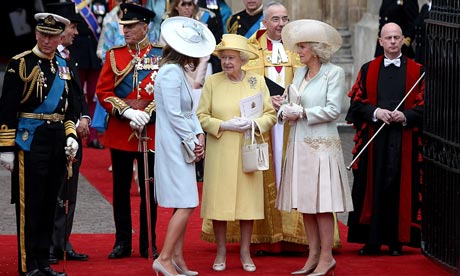
The Royal WeddingIn our emergency department, we tried putting physicians and patients together at the front door.  Staff – nurses and physicians – hated it.

Why do all this?” they asked.

Because it’s what we do for our family and friends,” we said.  “We never make you or your family wait. We’re trying to see if we can do the same for everyone.

Well, there has to be some benefit to working in the emerg!” they shot back.

The trial didn’t stick for many reasons, but it revealed a dichotomy in service intent.  Earlier, we chose ‘treat patients as family’ as a department vision.  It generated thoughtful nods, shrugs or eye-rolling and snickers.  But we didn’t get fundamental resistance until we tried to put ‘treat patients as family’ into practice.

Like we discussed in the ‘put patients first’ post, we need to know what it means to treat everyone like royalty.

Privileged Patients

  • never wait, or only for a few minutes max.
  • do no sit in waiting rooms with crowds
  • have attention paid to their personal comfort
  • walk straight over to imaging departments
  • get what they need right away
  • skip non-essential steps/go straight to the MD
  • have special access to their FP and consultants
  • feel comfortable asking an extra question or two
  • never need to say, ‘Sorry to bother you’ over and over again
  • know providers are happy to help them
  • choose who they see and ask around to find out the best person to see
  • do not wait on hold to ask a question
  • do not listen to answering machines
  • and so much more…

Privileged patients get the absolute best we can muster despite less than ideal offices and departments.

Great healthcare needs a guide to direct the service we provide for patients, how we treat people.  It’s impossible to come up with every specific instance describing how process should improve.  Asking how our privileged patients would experience healthcare suggests a place to start.

Would privileged patients

  • have to line up to get registered?
  • fill out endless forms before having treatment started?
  • spend hours enduring bureaucratic process to get a question answered?
  • feel they shouldn’t bother their providers?
  • wait for x-ray or lab results?

Privileged patients know how to access care and do not wait for what they need.  They look at their x-ray images as soon as the film gets captured.  They watch their lab results pop up on the computer as they get reported.  They know secretaries by name and call them without fear.

Great healthcare systems treat patient like family. They treat everyone as though they were a privileged patient.

(photocredit: theguardian.com)

Put Patients First – What Does It Mean & How Can We Do It?

Madteaparty“Then you should say what you mean,” the March Hare went on. 


“I do,” Alice hastily replied; “at least–at least I mean what I say–that’s the same thing, you know.” 


“Not the same thing a bit!” said the Hatter. “You might just as well say that “I see what I eat” is the same thing as “I eat what I see”!” 


Great healthcare systems put patients first; patients hold top priority.  How we view patients impacts treatment.  What then does “put patients first” mean?

  • Do we envision product placement, like ‘put magazines in front of customers’?
  • Or do we mean a ceremonial nod to a notion that germinated Medicare?
  • Or do we mean something like, “Go Blue Jays!”?

Individuals versus Herds

A system cannot put patients first.  A health care system cannot function by considering patients as individuals.  To design a service that cares for 11 million people, we ignore individuals and focus on herds.  We step away from the bedside and envision patients as discrete atomic units or numbers.

Furthermore, systems are impersonal. Only people put patients first.  Systems grow out of complex relationships between organizations, providers, suppliers, regulatory authorities, governments and a crowd of others.  Systems cannot put patients first without intent and effort.

Medicine is ineradicably individualistic.  The doctor-patient relationship defines medicine.   Unless a healthcare system intentionally measures its policies by whether or not it puts patients first, patients will get treated as members of a herd.

Put Patients First

It means we assign or attribute value to patients above innovation, budgets, quality, regulation, efficiency or any other important issue that systems tackle.  Patients must be seen as individuals with unique perspectives, genetic make-up and experience of disease and health; as units of social groups, communities and families; as members of society with complex roles to play in other patients’ lives.

It relates to how we consider patients when we think about healthcare systems and design.  It implies that our thoughts about process and efficiency place patients’ needs and unique expectations before system policy, budgets and regulatory restraints.

A vision for healthcare must start by adopting an intentional, arbitrary standard of putting patients first.  ‘Intentional’ because systems can function efficiently without considering patients.  ‘Arbitrary’ because systems can choose to not put patients first.  Next time we see heads nodding when you talk about putting patients first, make sure we say what we mean.


A Vision For Healthcare

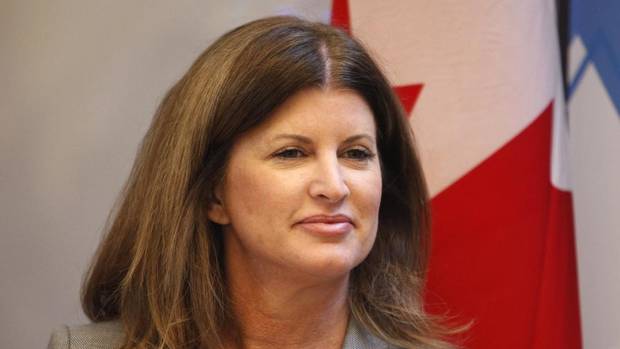
Health Minister Rona AmbroseHealth minister Rona Ambrose announced a panel to look at improving the quality and efficiency of healthcare.

What would you suggest if you sat on the panel?  What features do you consider essential to a great healthcare system?

If asked, I would offer the following list of concepts, ideas and axioms.  Most apply to all healthcare systems – public, private, hybrid, etc.  Most are funding agnostic and need consideration whether we use taxes, insurance or out-of-pocket dollars.  Many points in the list already feature in Canadian Medicare.

Patient service can suffer in any healthcare system regardless of funding and design. We cannot assume some issues disappear simply by legislating a particular system.

One comment for my libertarian and small-government readers.  Before you spit out your coffee at this list, I think we must acknowledge that no system will ever be 100% market based just like no socialist system can operate without some element of profit (e.g., using medications developed by industry).  We need to make business oriented approaches as compassionate as possible, and statist approaches as customer-focussed and accountable as possible.

Books, lectures and conversations impacted the ideas.  Please add more by sharing your comments!


A Vision for Healthcare –

110 Ideas

To incorporate feedback, I put a Vision for Healthcare on its own page.  Please share your thoughts on this post and any other and I’m improve the content as you share.  Thanks so much!