

Desperate Doctors

20160802_082259I almost drowned at summer camp. I told everyone that I could swim.

I just didn’t say that I could only swim as far as I could hold my breath.

I always wore a face-mask.  It let me see my next hand hold, somewhere to pull my head above water.

Our summer camp offered one, main activity: swimming.  Kids spent all afternoon jumping off a raft, avoiding the leeches near the shore.

The raft floated far out on the water. Could I swim there on one breath? After 2 ½ days of avoiding the water, I started drawing attention. Wanting to play with the cool kids, embarrassment overcame fear.

My breath took me within 10 feet. I saw flashes of raft and swimmers, whenever my mask broke the surface. I flailed, and sank. Kids cannonballed and wrestled around me. They shoved to get on the raft. I gasped and coughed and lost sight of my target.

The next thing I remember, my hand gripped the ladder. Shaking with exhaustion, I crawled up, rolled on my back, and faked a smile. Kids pushed and jumped in the water like I did not even exist.

Desperate Doctors

Doctors tell patients, “Everything is going to be all right. Your lung has collapsed. But we can fix it. We need to place a tube between your ribs…

What happens when desperate doctors start to panic?

Premier Wynne’s government has attacked doctors and treated them worse than any government in recent history. Wynne has unilaterally cut almost 8% of gross funding, in less than 24 months, and has completely ostracized doctors from decisions about medical care.

Then without warning, in the middle summer, when no one reads newspapers or blog posts, the Wynne government decided they want peace with doctors and offered doctors a new deal.

No one even knew doctors were negotiating, including doctors. The government offered another take-it-or-leave-it deal, like they had in 2012, 2014 and 2015.

The government sweetened this offer a bit. They promised to fund 2.5% of growth, double what they had been funding, but still less than the historic 3.1% growth to cover new patients and doctors.

Most importantly, government offered the Ontario Medical Association (OMA) a spot in ‘co-managing’ healthcare. They offered doctors a spot on the raft.

Thick as Thieves

The Wynne government faces 5 criminal investigations. Premier Wynne’s approval rating sits at 18%. The Ontario Liberals are famous as the most indebted sub-sovereign government in the whole world, having borrowed to win votes and fund windmills, gas plants and pension plans.

Health Minister Hoskins boasted for two years that his government has given 1.25% percent more to medical services. He sounded like a deranged parent boasting to Children’s Aid that he gave another 1.25 oz of formula to his baby, even though the infant needed at least 3.5.

Now the government – under criminal investigation! – has offered desperate doctors a spot on the government raft.

The OMA rejected a deal in 2014 because it underfunded growth and offered a fixed budget.

The board faced a sharp decision this time: Do we choose more unilateral cuts, uncertainty and no voice in the system? Or do we choose collateral cuts, less uncertainty and trust that we will get a ‘voice at the table’?

If the OMA is shunned from all decisions, how can it advocate for members?

Aren’t predictable cuts better than unilateral ones?

Isn’t it better to sit on the raft, while government throws Bills like 210 and 119 into the water?

Or should doctors fight back, on principle?

Regardless of the pros and cons, or what you think of this contract, government has doctors over a barrel. Either way, doctors must dance. They lost their say in the matter in 1967.

Doctors Vote

The OMA has done everything – short of parades and door prizes – to convince doctors to accept this deal, leveraging every ounce of good faith in the process.

A large group of doctors has called for a ‘General Meeting of the Membership’, the second one ever. The last Meeting occurred in 1991 over a similar, less than ideal tentative contract. It foretold a decade of cuts. Doctors accepted the contract, and the next one in 1995. By the end of the 1990s, 2 million patients had no family doctor. Bestsellers like, Code Blue, predicted the collapse of Medicare.

Not Cool

After nearly drowning, I sat on the raft and hugged my bony knees all afternoon. The kids ignored me. I was not cool. I do not remember getting back to shore, or ever going back to the raft.

Desperate, divided, powerless and panicked, doctors must make a terrible decision. The government will do what it wants. Doctors can be part of a dysfunctional government or have dysfunction forced upon them.

Faced with any other option, everyone chooses to not drown. People get that. But it’s a terrible way to make an important decision. Surely, patients deserve better than this?

(Disclaimer: In case it was not obvious, this post tackles the nature of the decision, not the content. Please do not read into this any more than it says. My official, approved, public opinion on this deal can be found here.)

Crisis Management for Doctors – 7 Tips

hurt lockerAs a rule, Keep your mouth shut works almost everywhere. Most things get worse when we speak.

However, silence can cause trouble, too. Even a pause can be deadly:

Who do you love most: me, or my sister? 

Mom, was I a surprise pregnancy?

If we want safety, silence offers the best protection. It makes sense to hide and keep really quiet, when danger prowls – but not for leaders.

Doctors must lead. And leaders need to speak; precisely when everyone else is sliding down in their seats around the table.

Leaders must say something, even when there is nothing perfect to offer. Silence does nothing for a team. But we have to be careful, too: empty platitudes can come across like ‘Get Well’ cards at a funeral.

Medical Politics Thriller

If this were a spy thriller, Ontario sits at the point in the story when a bomb has just been found under the parliament buildings.

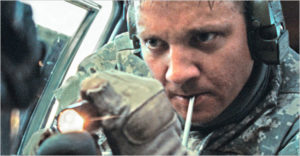
Helicopters circle. People run around screaming, and a sweating bomb tech, in safety gear, extends a shaking set of snips towards a jumble of wires.

Will he cut the blue wire…or the red one?

If you Google crisis + leadership, millions of results pop up like:

 These offer great advice. But doctors need something a bit different.

In Ontario, leaders have stepped forward from all sides: within the establishment, without, and in between. For all leaders, here are 7 tips:

Crisis Management for Doctors

1) Be cool – Lighting our hair on fire comes naturally for some. The heat and smoke releases energy and feels good, I suppose. Resist the urge, no matter how much better it makes you feel.

Everyone who looks to your reaction feels much worse when you lose control, even with an audience of one.

2) Avoid the simplistic – Us against them wins on a football field, but not with large groups. Black and white works well until kindergarten.

Oversimplifying complexity might seem to add sanity for a moment, but it never leads us out of a crisis.

3) Keep making friends – Fights during Thanksgiving dinner often leave deep, irreparable scars. Remember whom you are fighting with.

You may need to see them for your heart attack next week.

4) Forgive more – People make dozens of mistakes every hour, at their best. Under duress, we make many more. Itemized lists of all the ways other people messed up, acted poorly, or otherwise disappointed us rule out reconciliation.

Do not assume maleficence, when ignorance explains behaviour well enough.

5) Plan for the future – Force yourself to imagine life after this crisis has past. Even if things do not work out in your favour, this crisis, too, shall pass.

Your response will shape your experience of life afterwards.

6) Stop and think – Surviving the next minute blocks out all other thought in a crisis. We need more time to reflect, at the exact moment when there isn’t time to breath.

Stop. Think. Take 10 minutes to read. Pseudo-dementia comes from cognitive overload.

7) Remain positive – I think it was Dee Hock, founder and CEO of Visa, who said something like, “The times are too tough, and the outlook too dire, for negativity.

We need hope the most, when hope seems most unreasonable.

Crisis and Silence

Trauma and crises are not all bad. Birth is traumatic, violent even. Full lives have very few dull moments. Dreams of peace and quiet come true only for the most heavily sedated, on locked wards.

The excitement in Ontario will pass, eventually. We will go back to working together, sharing patients, and finding ways to work with others to improve our healthcare system. But during a crisis, many people find it safer to clam up and keep silent.

We need people to offer reasons for hope, no matter which direction this turns. Silence is not an option in crisis management.

Photo credit: The Hurt Locker

Pay Doctors to Provide Less Care?

raking-leavesI made a big mistake last fall. I offered to pay my kids $1 for every pile of leaves they raked. Within 20 minutes, the main lawn had 50 large piles, and another acre of leaves lay waiting. I panicked.

Would I run out of cash and credibility?

How did chronically tired teenagers move so fast?

As the piles grew and my wallet shrank, a plan hit me: I could bribe them.

The happy workers finally agreed to a break. They weren’t anywhere near tired. I offered them immediate payment and a take-it-or-leave-it ice cream to stop working. They pretended to complain and took the bribe.

Paid to Stop Work

Franklin D. Roosevelt paid farmers to slaughter piglets and leave fields unplanted as part of his New Deal (The Agricultural Adjustment Act). FDR did increase food prices, as he had hoped, but the fallow fields created huge dust storms.

In this instance, FDR was not trying to save money; he just thought he could increase farmers’ incomes by manipulating the industry. (It didn’t work.)

Today, farm aid programs cost less, if farmers do not even start farming. It costs money to till, fertilize, and grow crops. Government saves money on social programs for farmers, if they pay farmers to do nothing. Apparently, government still pays some farmers to destroy crops.

Pay Doctors to Provide Less Care

Since the start of managed care, experts have argued over the ethics of paying doctors to provide lesscare. Doctors want to care for patients. Patients want care. If doctors get paid for care, and patients never pay anything for the service, then the amount of care delivered tends to grow quickly.

Patients do not like the idea of paying doctors and hospitals bonuses to deny care. It seems that “incentives for less medical care” would undermine the motivation to care in the first place.

The economic logic is simple: If docs earn more for providing more care, then patients get more care, in a ‘free’ system. If docs earn more for providing less care, some doctors will find reasons to support less care for patients.

Champions for less care usually start with an example of waste:

I saw a patient, who had already been to 2 walk-in clinics that day, for the same runny nose!”

The Americans started a campaign to provide less ‘care’. The Choosing Wisely movement reduces obvious waste and over treatment.  Especially in America, some patients get too many medical services. They get care they do not need; like getting highlights and an eyebrow waxing, when you only booked a trim.

Choosing Wisely vs. Rationing

Does it make sense to pay doctors to provide less care in Canada?

Paying doctors to provide less care could appear unethical in the face of long wait times. For example, patients wait up to 1 year just to see an Orthopedic Surgeon in some areas. The idea is not new in Ontario. It wove through negotiations in the 1990s, around savings and restructuring. Minister Smitherman offered to pay doctors for prescribing cheaper drugs.

Government always blocks physician efforts to increase business efficiency. For example, government continually refuses to allow physicians to hire extenders, in the way dentists employ hygienists. Government would rather have doctors see fewer patients overall, than support ways to improve doctors’ efficiency and risk an increase to the number of services provided to patients.

Wait times notwithstanding, it still seems reasonable to pay doctors to find and eliminate the waste that only doctors can see.

Co-Managing Care

Today, Ontario doctors review a tentative contract that offers one-time payments, if they can co-manage medical services. This means that doctors get paid extra, if they can limit the growth in medical services to 2.5%. Medical services have grown at 3.1% per year, since 2001, due to population growth and more doctors entering practice.

We should get rid of wasteful care. Perhaps, we should call wasteful care simply waste. Doctors should stop doing any of the useless things that doctors do because they have always done them. We need to streamline care and support attempts to modernize the healthcare system.

But we must be careful. Who knows exactly how much waste exists in the system? Some experts say that the healthcare system should only grow at 1.9%, even though it never has, in recent history. Why do such long waits still exist, if the system has been growing faster than the experts deem necessary, for the last 15 years?

Co-management can feel like rationing, to patients. One person’s co-management is another person’s austerity.

I support the ideal of co-management, but we must move carefully. This government loves to cut spending on medical care, so it can spend money on getting re-elected.

Like a bribe to stop raking leaves, people respond to large incentives. We can all rationalize around ethical hurdles. Maybe we should ask first, What do patients think about it?

photo credit: news.au.com