 Dr. Darren Cargill offers 9 steps to evaluating Ontario Doctors’ New Deal in this guest post.
I want share a bit of tool I am using to help me decide how to vote on this tentative deal.
- Separate the deal from the Liberal Party. If this vote was a referendum on the Liberals, we would all vote “no, No, a thousand times NO!” We would never vote yes. Frankly, we would never accept a deal. The Liberal mismanagement of the province would prohibit us.
- Make it explicit who you are voting for. Is this vote for you, a group, for patients, for the future. Voting for you means, “How will this deal affect me, my family, my practice that I have built?” Voting for patients means, “How will this deal affect my ability to care for patients?” Same for a group with more focus on a particular area. Voting for the future means keeping your mind open to possibilities inherent in both the “Yes” and “No” votes.
- View both sides of an argument with a dispassionate mind. I had to do this recently with the MAiD arguments. When the SCC ruled on assisted dying in February 2015, I signed up for both sides of the debate via Twitter, email subscriptions, blogs. For those of you who simply can’t invest the time, follow a few opinion leaders on each side that you feel you can trust.
- Separate the deal from our ego. By this I mean we will never get a deal that properly values our training, expertise, dedication and commitment. At least not under the Canada Health Act.
- Separate the deal from a referendum on OMA leadership. A “No” vote will not bring about change at the top of the OMA nor change at the OMA in general. If you want to change the OMA, you can do this by running for an elected position, joining a committee, get involved. This is not a referendum on Dr. Walley’s leadership as president nor the role of the OMA as our representative. It might be a referendum on the Board as a whole, as they have recommended this deal but the Board is made up of elected officials and decisions by the Board are not unanimous in most cases but moved by majority vote.
- BATNA. This is a negotiating term. It stands for “Best Alternative to a Negotiated Agreement.” While most would say this is simply what is most likely to occur with a “No” vote, it goes deeper than this. What does a “No” vote mean for future deals? Is a better deal more or less likely? Is the government likely to move on issues like Binding Arbitration and a fixed PSB or have they been consistent in their refusal?
- Forget the ideal “deal.” It simply isn’t there. There is no deal that will reverse all previous cuts with interest, fund unlimited demand, find FT jobs for all our grads, fully fund all growth and population increases and magically fix relativity in a painless wave of a wand.
- Have a “goal” in mind. Don’t simply vote “no” and not have a deal in mind. “If you don’t know where you are going, any road will take you there.” If this ISN’T your deal, what is? Is it a higher rate of growth? Is it the reversal of cuts? Remember, there is no ideal “deal” so you can’t have them all. What is the one thing for you that this deal MUST have, if it isn’t there already?
- Treat each side with respect at all times. Vitriol and frank “trolling” diminish us as a whole.
I hope this helps. I’ve tried to keep it short and sweet so please excuse the brevity but I think we are all suffering from reading “War and Peace” every night.
Darren works as a palliative care doc in Windsor. He has been published many times in his local paper and plans to launch his own blog very soon. We will share his web address as soon as it goes live. When you see Darren, please bug him to write a book on palliative care!
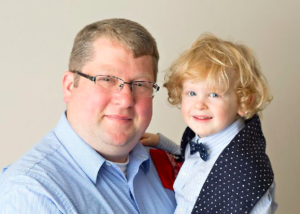
Photo: Darren and Owen