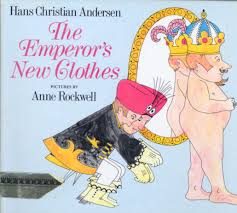
 Most people say you are naked, if you go out wearing only a hat. Sunbathers wear less fabric than found in a toque, yet we do not call them naked.
Naked looks different to nudists and sunbathers.
Most people say you are self-employed, if you run Molly’s Housecleaning Service. You might even say you are self-employed, if you run a Molly Maid franchise. But you are not self-employed just because you buy a mop and gloves to work at Molly’s Shopping Centre.
Private vs. Government Care
Medicare covers all medically necessary care in Canada: it is illegal to pay for care privately.
A few provinces allow doctors to opt out of Medicare, as long as they bill patients at the fixed prices set by the government insurance plan.
In Ontario, doctors cannot opt out anymore (Future of Medicare Act).
Governments and regulators dictate:
- # of MDs allowed to work Family Health Teams
- # of after-hours service family doctors must provide
- # of X-ray licenses, with strict rules on locations
- # of ultrasound licenses, with strict rules on location
- Laboratory licenses and locations
- Out of hospital surgical facilities
- Hospitals: pretty much everything about them
- MD training, continuing medical education, change in scope of practice
- Blood-testing for exposure-prone procedures
- Rules around consent and competency, charting, maintenance of records
- Rules around completion of death certificates, immunization
- Mandatory public reporting of diseases, reporting of gunshots
- Etc., etc., etc.
Every year legislators, who are eager to direct how doctors care for patients, write new legislation with dozens of statutes.
Regulatory oversight and clinical guidelines add piles of rules to help doctors behave. Well-meaning elites believe that patient safety improves, if they leave less to clinical judgment.
After programers feed all the rules and regulations into electronic medical records, patient care turns into a cacophony of clicks in dozens of tick boxes.
And physicians shall tick boxes or risk a failed review by the College.
Privately Owned Clinics
An expert, from a major healthcare stakeholder organization, lectured us on system sustainability. Someone asked how to innovate while under government control. He said,
“Remember…. All doctors’ offices are privately owned and privately run.”
What did he mean by saying privately owned and privately run?
Either he made a trivial statement of obvious fact, like saying, “Remember… You are alive”. Or he meant to remind us of something more.
Did he mean that private ownership indicates freedom; some sort of market economy? Was he implying that government has not taken control of clinical care?
I can only imagine that he meant to say there is something very private going on in the provision of medical services.
Not only that, he seemed to imply support for this kind of so-called private care. Or perhaps, he just meant that doctors should appreciate that they still get to pay for offices out of private billings?
The only non-trivial reason for reminding us about privately owned and privately run doctors’ offices is to say that private care exists in Canada.
But private enterprises exist to earn profits.
Ergo, Canada has a blended delivery of universal care; the government does not control everything.
Ta dah! We are more like Europe than you realized.
Only supporters of government controlled healthcare say things like that, and many do so at every opportunity. Those who support government controlling the means of production of medical services – a nationalized medical industry – want you to believe that Canada has private medical care now.
Two Separate Debates
- We have (too much) private care in Canada.
- Doctors’ offices represent private care in Canada.
For those interested in the first argument, check out an article by Colleen Flood about private care, and Yanick Labrie’s response. Also, look at Bacchus Barua’s article on private care. But argument #1 is a separate debate.
For now, we are only discussing #2.
Side Bar: Independent Contractor vs. Employee
Self-employed, or independent contractor, means something to the taxman. Employees get benefits, and employers pay EI and CPP. Independent contractors (ICs) avoid these deductions.
The courts opined (as they do on every social issue):
In a landmark case, they birthed the Weibe Door Test to determine if you are self-employed. Basically, ICs must have an agreement, control of their work, must buy their own tools, and need to assume the risk of business losses. (See the Power Point part way down this link: Independent Contractor and the Weibe Door test for more.)
Until the taxman says otherwise, most physicians are still independent contractors in Canada.
Too Much Private Care
Social planners see doctors’ offices in need of government help. Inefficiencies need to be trimmed, regularity enforced, and the public protected, with help from the top down. Private offices should be as safe as a government building.
Others think society is stronger, when built from the bottom up, by people and not governments. They want to decrease government ‘help’ in front-line patient care.
What is a Private Business?
Business firm in the private (non-public) sector of an economy, controlled and operated by private individuals (and not by civil servants or government-employees). Used also as an alternative term for private limited company.
private sector
n.
The part of the economy that is controlled by individuals or private organizations and is not funded by the government.
Nationalized Lemonade Stands
Picture a child starting out in a nationalized lemonade system.
The child can only sell lemonade on a certain block, at fixed prices billed to the government, made with government stamped lemons.
The child cannot give ice with the lemonade: customers must get ice at another regulated venue, at a specific location.
The child cannot serve ice cream with lemonade. That requires another licence.
And so on…
Is this a private refreshment service? Does the nationalized lemonade stand look more like the post office or more like a traditional lemonade stand?
Stating that the child owns the table and jug is just sour condescension.
Private Care Myth
There is very little private about doctors’ offices beyond the sign on the door.
Government sets the prices and determines the services allowed. Regulators dictate which customers must be seen.
Guidelines prescribe investigations and treatment. Inspectors ensure compliance with entries, exits, storage, privacy, and much more.
Government dictates hours of service: including evenings and weekends, holidays, and locum coverage. In many cases, the government owns the facilities and hires the staff, too.
Physicians own or lease their offices and equipment, hire staff, and assume the profits/losses of their efforts.
But they can only work for the government.
Prices are fixed and unilaterally slashed by the government.
Conduct is dictated and directed by the regulatory colleges, educational colleges, public health, and politicians’ whims.
Privately Owned and Privately Run
Experts, who talk about care in privately owned clinics, trick us with equivocation: they say private but mean something different.
Reminding us that doctors own and run their offices just distracts from government control in every aspect of medical care. Until Canada allows truly private clinics, like every country in Europe, reminders about privately owned clinics mean nothing; they are naked nonsense.

 In the early 1800s, weavers feared the end of their profession.