So, You Want to Serve in Medical Politics

parliamentCongratulations! Your interest in medical politics sets you apart from most practicing physicians.

I was asked to share some thoughts for doctors entering politics. I tried to focus on a few favourite concepts.

We can discuss process details, or issues about specific organizations, in the comments section.

No One is an Expert on Everything

You can learn a tonne about medical politics, but you will never be a superstar at everything. Medical politics is not like Biology. You cannot aim for 98% on the exam.

I suppose the OMA President might almost be an expert on everything, for a few minutes, sometime near the end of his/her term. But even Presidents soon find they must defer to someone else.

Do not set out to learn everything. You will despair. Let it sneak up on you.

Everyone is an Expert on Something

Find one thing that interests you: IT, immunizations, HSFR, whatever. Pour yourself into it, even for just a few minutes.

You are now, with almost certainty, an expert on this issue in your local community.

Share what you know. Ask others what they think. Learn more about it. You will be the ‘go to’ person in your hospital or clinic on that topic.

As an expert, you add value every time you share your expertise. Get addicted to adding value. Your addiction will make you crave more expertise.

Your medical politics hobby will soon take over your life as you seek to learn more and more. And you will love it. Make sure your family approves!

Experience Counts in Medical Politics

Doctors perform in a strange play. We train to act with confidence, while knowing we have incomplete knowledge.

We learn to trust our training. Doctors must act with as much certainty as colleagues with years of experience. No matter what grades you got in medical school, every graduate gets called ‘doctor’ and bills the same fees as experienced doctors.

Most of the world does not work like this.

Other industries bow to experience. An MBA does not mean you can run IBM. You need a few decades to learn how to lead.

Of course, some doctors bring an interest in politics from grade school. They volunteered on political campaigns and followed politics their whole life. But they are rare. And even wunderkinds need to value experience and humility.

Experience makes you a better leader, but even more importantly, valuing experience increases your influence and teaches you defence skills. Find experienced leaders and suck every bit of wisdom you can get out of them.

A New Logic

Doctors learn to diagnose and treat. (Let’s forget about the ‘educate and motivate’ of modern medicine for now.) Patients usually give us the diagnosis on history and physical. Then, we treat; delayed treatment is unethical.

Diagnosis works the same in politics, but treatment is completely different. The process of arriving at a political solution means even more than the final solution itself. Many doctors hate this.

If the solution is to ‘do X’, then we should just do it. Why take so long to get it started?

Political solutions require people to buy in to an idea. People need to weigh the risks that a solution presents to their personal vision of how things should work. People want to feel they had a part in crafting the solution.

For many reasons like these, medical politics requires a new decision making process, a different logic.

Obsessed with Issues, Blind to Vision

Doctors never need to think about vision. They accepted the medical vision long ago: doctors help people. The rest of our life is spent fixing particular issues. For doctors, reflection on vision demands flexing an atrophied muscle.

Dug-upIssues are to doctors as squirrels are to dogs: irresistible!

Doctors find and fix issues. That’s why patients value doctors. But after decades of getting rewarded for fixing issues, we often struggle to concentrate on other things.

Medical politics is loaded with issues, important ones. But issues should not define our goals. Doctors need vision in medical politics.

  • Where are we going?
  • What do we sacrifice by supporting this solution?

Doctors need to work, like guide dogs in a park, and stay focused on where we are going, without chasing the squirrels.

Clone Yourself

You should think about succession planning as soon as you get elected. Do you know anyone who:

  • Enjoys being overwhelmed with new material?
  • Gets excited about ideas?
  • Respects experience but strives for change?
  • Has patience for process?
  • Loves discussing vision, not just issues?

Today, strong political forces push doctors away from working as independent professionals, towards employed technicians. We need doctors at the centre of medical politics.

Again, Congratulations on stepping into a fascinating world! Find a mentor and then teach them what you learn. Patients need doctors interested in the weirdness of medical politics more than ever before.

Note: I am not the official spokesperson for any organization. These thoughts have not been vetted. Errors are my own.

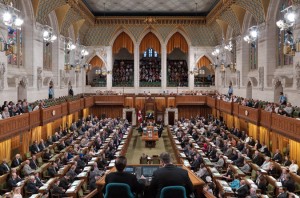
photo credit: www.parl.gc.ca,  www.disney.wikia.com
It’s not a choice: Good quality needs relationships and measurement

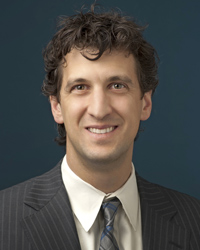
photo-joshua-tepperI was thrilled when Dr. Joshua Tepper, CEO of Health Quality Ontario, responded on Twitter to a popular post: Medicine is Relationship, Not Quality Metrics.

Josh has a true heart for patient care and the centrality of the doctor-patient relationship. He is also passionate about quality.

He asked if I would post a response from him, if he wrote one.

I said, “Of course! I’d make it a stand-alone blog post!

So, here is Dr. Tepper’s response. I think it’s excellent and look forward to hearing what you think of it, too.


It’s not a choice: Good quality needs relationships and measurement

Pursuing the six dimensions of quality for improved patient outcomes

This blog is inspired by a posting from Dr. Shawn Whatley a couple months ago.

Shawn is a family doctor, health care leader and an active member of health care’s social media sphere. He does a nice job of bringing a range of different views to the forefront.

In his blog, “Medicine is Relationship, Not Quality Metrics,” Shawn shares the perspectives of two physicians who feel that the doctor-patient relationship is more relevant to good patient outcomes than quality metrics. He quotes Dr. Michel Accad, who says that measuring quality-related outcomes “actually makes quality worse.” He also shares the perspectives of Dr. Michelle Vilcini, who talks about what she sees as one of our collective failings: “trying to measure things that can’t be measured.”

I’ve had a few people ask me via Twitter for my thoughts, so here they are.

First and foremost, it is a false dichotomy to see this as an “either/or” choice. A good doctor-patient relationship is actually one aspect of quality; it is captured within the concept of being “patient-centred” – one of the six recognized dimensions of quality, as defined by the Institute of Medicine. The six dimensions, including safe, equitable, efficient, effective and timely care, have been widely adopted as a framework for quality here at Health Quality Ontario, where I work as President and CEO, and elsewhere. Patient-centredness is also the cornerstone of the College of Family Physicians medical home model.

The importance of patient-centredness is also reflected in a blog by Dr. Ashish Jha, a physician and health policy researcher. In one posting, Ashish reports the results he got after he asked his Twitter community for a one-word response to the question, “What makes a good doctor?” The top five responses were “empathetic”, “good listener”, “compassionate/caring/kind”, “humble” and “competent/effective.” His conclusion: “Most people assume that physicians meet a threshold of intelligence, knowledge and judgement and therefore, what differentiates good doctors from mediocre ones is the ‘soft’ stuff.”

There is no doubt that the “soft stuff” – being patient-centred, and nurturing doctor-patient relationships – is part of quality.

But there are a couple places where Shawn and I might have some differing thoughts on the matter.

With regard to the suggestion that we can’t measure the doctor-patient relationship, Shawn suggests that there is no way to accurately gauge the encouraging friendship between patient and provider. But I’d point to the many ways in which the primary care field is increasingly trying to measure that relationship through surveys that target the experience of the patient. There are examples of patient-centred metrics in the Primary Care Patient Experience Survey and the Commonwealth Fund Survey, two among many, which ask for ratings on aspects of the doctor-patient relationship. These surveys can clue individual providers and entire teams into some of the more subtle areas of their care that need improvement. It’s worth noting that there has also been at least one study suggesting a troubling link between patient satisfaction scores and the propensity to prescribe opioids and/or unnecessary testing. This speaks to a need to measure patient experience in addition to other dimensions of quality, such as safe and effective care, and it leads to my second point of divergence with Shawn’s posting.

Building a strong doctor-patient relationship and concentrating on patient-centredness is just one dimension of quality and good care. But care also needs to be safe, equitable, efficient, effective and timely. Naturally these dimensions overlap, and a strong patient-centered relationship will make the other dimensions easier to achieve, but I feel we must be conscious of all six dimensions – especially when discussing improving patient outcomes.

Finally there is the suggestion in Shawn’s work that having a good doctor-patient relationship means you don’t need “a bunch of numbers” to measure it. In response to that, I’d go back to Ashish’s Twitter exercise. One of his Twitter followers responded to Ashish’s question with the following comment: “If your doctor doesn’t use the best data available to them to take care of you, do they really care about you?” Quality metrics and relationship building are connected more than we might think. Of course we can and should comfort, support and listen to our patients. But we also need to let them know when they are due for a Pap smear or a colorectal cancer screening test, or when a cholesterol-lowering medication might increase their chances of living to see their grandchildren graduate from high school. These are the metrics that make a difference.

I’d argue that we shouldn’t try to choose between good relationships or measurement – one is a dimension of the other. Similarly we should be cautious in suggesting that important things like the doctor-patient relationship can’t in fact be at least partially measured. We’d be doing a disservice to our patients to dismiss all quality-related outcomes when data about our practice can help us provide better care.

Thank you to Dr. Irfan Dhalla and Anna Greenberg for providing their input and advice on this blog.


Two Kinds of Doctor & Two Kinds of Politician

Two Kinds of DoctorWe find two kinds of doctor: fixers and servants. Both consider themselves healers.

One makes problems go away. The other makes the best of chronic disease. Maintenance and chronic issues frustrate the fixers. Quick fixes, while necessary, feel like Band-Aid treatments to the servants.

Fixers believe in final solutions. On the one hand, they make a living fixing acute issues.  On the other, they wish the issues did not exist in the first place.

Servants know that, no matter how much care they provide, chronic disease is unending. Even the best diet and exercise program will not stop decay. Servants resist decline; they fight to improve function. But servants accept that their patients will wear out and die. Servants seek to make the journey as good as possible.

Public Service

Fixers and servants work in government, too. Fixers believe that the right program will make everything better. They look for silver bullets. They crave utopian designs.

Servants have more modest goals. They realize their efforts can make things good, at best, but never perfect. Their ends are limited and indistinct, whereas the fixers’ ends are grand and crisp.

Healthcare is more like a chronic disease than an acute illness. We should not expect a cure for healthcare in the way some people expect a cure for cancer.

Jeffrey Simpson lamented that healthcare is a chronic condition, in his book by the same name. It shouldn’t be so hard. Why can’t delivering healthcare be more like delivering the mail: crisp, measurable, and suited to bureaucratic solutions?

Assumptions

Solutions start with assumptions. Healthcare frustrates with variety and individualism. While we’ve discussed it many times before, it bears repeating with an example:

We can generalize about the health impact of poverty. But there’s an enormous difference between the poverty of a homeless person in Toronto and a single mom in Northern Ontario. They both might face similar health concerns, but solutions must look very different.

This frustrates planners. We should be able to treat hypertension with strict guidelines regardless of income or location.

But doctors know different. Local, individual problems make a huge difference.

Healthcare requires local, individualized solutions for a chronic condition. The search for grand solutions to fix most healthcare problems will continue to irritate reformers. Their frustration makes them look for someone to blame: often ‘uncooperative’ patients and doctors.

Cause or Effect

Are doctors more like public health workers, looking for the one pump that spews bacteria into the community? Or are we more like old fashioned GPs, who treat acute injuries and palliate chronic disease?

Of course, we need fixers and servants. Doctors must be good at both. But new fixes aren’t as common as before (see The Rise and Fall of Modern Medicine). We spend more time caring for chronic disease, less time fixing it.

We need a system designed to care, and support local service, instead of creating grand solutions. We need the public service to serve patients, not fix them.