
Abuse, Not Burnout

Abuse, not BurnoutMany physicians should see a doctor. They are irritable, tired, despondent, unsatisfied with work, and avoiding responsibilities.  They report physical symptoms: headaches, GI upset and poor sleep.

Experts say doctors are burned out:

Abuse, Not Burnout

But one doctor calls BS on burnout. Dr. Pamela Wible, ‘America’s Leading Voice for Ideal Medical Care’, says,

“Please stop using the word burnout. You are not burned out. You’ve been abused. Let’s get the diagnosis right.”

“…medical students and physicians are collapsing because they are suffering from acute on chronic abuse.”

She wrote a popular blog piece: Burnout is Bu-lsh-t.

And she wrote a best-selling book: Pet Goats & Pap Smears: 101 Medical Adventures to Open Your Heart & Mind. (Thank you, Dr. Boyce!)

Despite her outrageous book cover, Dr. Wible makes a solid point. Victims of abuse often report symptoms like burnout.

Symptoms rarely indicate one disease. Fatigue, mood swings and stomach aches can mean almost anything. High calcium causes stomach aches, muscle cramps, and psychosis. But we do not say patients have stomach, muscle or mental problems when their calcium is high. They have a calcium problem.

Diagnosis

Many doctors show signs of burnout. But could it be abuse? If doctors are suffering abuse, not burnout, then calling doctors burned out just blames the victims.

Doctors often serve and recharge by practicing medicine in a developing country. No doctors ever tell how happy they are to return home to catch up on the latest legislation, regulation, and tick-boxing requirements of medicare.

Doctors recover from their symptoms of ‘burnout’ soon after escaping abuse. They go on to work even longer hours with energy and joy once freed to do so.

Waking Up

Disillusionment is good. It hurts to lose a dream, to realize what we thought was true is not. But life under an illusion cannot be full and rich. Dreams feel bizarre.

Many doctors talk about delaying gratification until middle age. The dream of being a doctor pushed them through 24 years of school. It promised relief when they finally got out of debt; finally got out of working night shifts; finally became financially independent; finally started a family.

Gambling on the dream, many doctors lived far below the poverty line, long past medical school. But most grew tired of frugality sometime in residency, in their late 20s and early 30s. At that age, debt works so much easier than pinching every dollar.

So after years of being poor – really poor by every measure of poverty in Canada – doctors finally start earning a decent income. Something almost as good as a school principal.

At this point, they usually take on even more debt. They buy a house and build their practice. The Wealthy Barber taught us that we must earn two dollars to spend one. Debt is even worse.  We must earn $2.50 to pay off $1 plus interest (depending on rates).

Sometime in their late 40s or early 50s, doctors expect to arrive, to be debt-free, to loosen up a little and enjoy life. But depending on how many kids (and spouses) they have, doctors often end up delaying this dream, too.

Over the last year, doctors tell me that they find it harder to make a living. Not maintain their posh lifestyle.  To make a living. Just when doctors thought work would get easier, they have to find new jobs, work overtime, and downsize their middle class lifestyle and expenses.

Doctors are frustrated. And with good reason. Even if doctors were earning huge incomes, which many do not, 10 years of heavily taxed earnings, after 35 years of poverty and debt, hardly balance out.

Treatment

Recovery starts with facts. It starts with the right diagnosis. Recovery will never come by telling doctors to maintain better mental health, or to get more exercise. It certainly won’t come from the common response, “Well, you chose to become a doctor!”

Recovery starts when doctors wake up from the dream. They need to find other doctors who feel the same.  Thousands of doctors are waking up to understand, in a personal way, that they cannot run a business when government has too much power and control.

This is not just a rant about political theory. It’s a reflection on current events. This will happen again, no matter what truce doctors may sign. Government will get desperate, again, and treat doctors like they have no civil rights.

Will doctors make the right diagnosis? When will they call this abuse, not burnout, and get on with treatment?
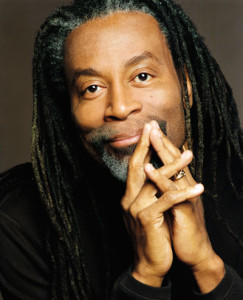
 

The Root of all Quality

bobby mcferrinDon’t Worry, Be Happy betrays deep wisdom in a simple package. Of course, we cannot be happy by telling ourselves to be so.

The song’s brilliance lies in redirecting our focus. It distracts us from real tragedy and makes us smile.

We do not become happy by focusing on happiness. We find happiness by looking for something else. Happiness sneaks up on us as a by-product of the search.

Quality by Design

System planners manipulate behaviour. For example, product placed at eye level sells more, and kids eat less junk food if cafeterias place healthy options first. Systems influence quality. Check out: Nudge: Improving Decisions About Health, Wealth, and Happiness.

System thinking pivots on fascination with The System. It cares much less about individual people inside the system. System thinking solves many problems. But people have uncanny skill at cheating systems, sometimes without even trying.

Babysitting Quality

WestJet treats its pilots like big boys and girls. WestJet does not babysit its front line professionals.

Same thing in university. Many students feel shocked that professors have no interest in spoon-feeding like teachers did in high school. Students soon develop responsibility for their own performance, or fail by mid-term.

Many students form study groups to clarify issues and encourage each other toward higher marks. For them, study groups work.

The Root of all Quality

Medicine is about people, not things. No amount of planning for quality and safety gets around individuals making decisions. And people make decisions for many reasons. Rules, reward, values, concepts, fear of punishment and social pressure can all influence our decisions.

Individual behaviour determines quality, and everyone wants to control it. Government controls rewards; regulators control rules and punishment; educational colleges promote concepts and values (e.g. CanMEDS).

But they all miss the glue that holds these together: relationship. Relationship trades on all spheres of influence.

Professional Relationships

Social structure, stability, and power come from small groups of connected individuals.

Groups of two to four physicians, who meet together regularly to discuss cases, share concerns, and offer support to each other, would create a culture of quality. Community doctors rounding on their in-patients used to meet like this all the time.

NOTE: Groups would need to rotate members every year or so. Quality would suffer if small groups of low performers met together for years.

If system planners wanted to do something really radical, truly innovative, they might encourage small, autonomous groups. Clusters of physicians could keep each other encouraged, accountable and passionate about quality and innovation.

Small groups would out-perform anything that a central authority could put in a guideline or regulation. Physicians who meet and talk together could apply cutting-edge research and knowledge to immediate patient needs. No central authority could ever come close to regulating that kind of service and care.

Small autonomous groups of physicians would make most current regulation redundant, almost comical.

Culture builds from the ground up. Leaders need to nurture, recruit, and develop outstanding culture creators, but ultimately leaders hand over the growth of culture to individuals.

Subversive Groups

Small teams are subversive. By their very nature they have ideas that will not be identical to those held by leadership. This makes some leaders panic.

Any intermediary power, or organization, that forms between the individual and the state, threatens Leviathan. Weak leaders worry about autonomous small groups.

Many large hospitals have gone out of their way to make the doctors’ lounge smaller or less accessible. They do not want doctors talking with colleagues. But informal groups form the basis of culture, society itself.

Square Pegs in Round Holes

Mandating group practices will not build culture. Doctors might organize groups for financial advantage, attend required meetings, but never enter into the relationship building required for culture. Meetings do not create culture. Relationship does. Government cannot build or mend local relationships with practice reform.

Quality does not flow from measurement, rigour, and reporting. These things identify gaps and quantify improvements. They can influence change, but they do not deliver quality per se. We need to learn how to get quality and not just identify when it’s there.

Quality: a Meta Result

Quality, like happiness, comes by focusing on something else. It comes with effort. But quality is more of a second order, meta-result that starts with culture built on relationships.

Blunt regulation, arbitrary legislation, and unilateral action obliterate culture. They drive doctors to despair, to sing Don’t Worry, Be Happy.

photo credit: bobbymcferrin.com

CPSO Value for Money?

Hunter BootsWe find money for things we value. A fool parts with his money for little value in return.

But price-value mismatch makes most of us shop for a better deal. When we find what we need for less than we expected to pay, no amount of pecuniary anxiety can stop us.

Apple iPhone 6 $800

Hunter Boots Women’s Original Nightfall Pull On Rain Boot $320

Xbox 360 Wireless Racing Wheel $7,716

Compact Brushless Hammer Drill/Brushless Impact Combo $500

Montegrappa Horse 2014 Fountain Pen $28,995 (!)

CPSO – College of Physicians and Surgeons of Ontario

At a round-table on self-regulation last year, two things stood out:

1 – Doctors’ anger at the CPSO

2 – Doctors’ devotion to self regulation

The CPSO is debating whether it’s a good time to raise dues for Doctors.

Maybe some people just enjoy watching doctors suffer. As new graduates field calls from their lenders, working doctors face > 30% net cuts by 2017, and as our glamorous, new Prime Minister seeks to emasculate professional corporations, the CPSO ponders increasing dues. It feels out of touch by half.

Dr. Rob Stern agreed to share the letter he wrote to the CPSO as one of many who spoke up:

Dear CPSO,

I find it doubly shameful regarding your fee increase for 2016.

Initially, we are asked to increase dues paid to you when many members are facing anywhere up to 20% or more in fee cuts due to the unilateral action by the Ministry of Health/Ontario.  You should also be tightening your belts and doing more with less as your membership has been experiencing.

Secondarily, we are asked for our opinion, but advised to “MAIL” in our feedback rather than providing our opinions online.  It is almost as if you folks are making it difficult for us to send in feedback and hope you don’t get too many negative opinions to justify your increase.  It is not clear that your “discussion forum” is being taken into advisement by the CPSO or is simply a forum to vent our frustrations to fellow members.  I hope you are taking comments there seriously as I am not sure I have seen a positive response there as yet.

Shame on you for your fee policies and pathetic attempts at providing “objective opinion feedback” from members.

..Dr. Rob Stern

cpso #60770

Dr. Stern’s comments reflect many others on the CPSO website.

But doctors’ anger about the CPSO goes beyond dues. It hinges on the CPSO mandate and how the college carries it out (see CPSO portrays doctors as untrustworthy – gated).

We need to ask what the CPSO is trying to achieve and whether it’s the best way to achieve it.

Doctors support governance by our peers but roil at nontransparent collusion with government. The CPSO exists largely unchanged, even after Justice Corey thrashed the “devastating” Medical Review Committee (MRC) in 2005. Many of the same senior leaders still hold court.

Long before we relied so much on regulation and legislation, doctors adjusted behaviour based on peer feedback: weekly case conferences, morbidity and mortality rounds, or time spent in the doctors’ lounge debating conundrums.

Since talking with friends went out of fashion, we now rely on random CPSO audits from ‘peers’ every 10 years. Despite horror stories, most go fine (gated link).

But even monthly CPSO peer chart audits — done by people doctors do not know or trust, using secret methods and ambiguous feedback — would never match the value of doctors talking together.

Old docs used to mentor younger ones. Both learned in the process.

Doctors support the rule of law – common law, not the continental variety.  A jury of our peers judges us best. Secret police or self-appointed judge-jury-and-executioners do not promote high performance or enthusiasm for patient service.

Regulation does not inspire excellence and innovation. Regulation strangles creativity and progress. Like salt, a pinch of regulation improves the mix, but too much ruins everything.

Doctors bristle at the price of regulation inside the CPSO monopoly. It might encourage doctors to shop for a better deal.

photo credit: Amazon.ca