
Medical Associations – Good, Bad or Irrelevant?

bridgePeople find creative uses for things. We use lifejackets as cushions, books as coffee coasters and paperclips to fix bra straps.

But we never forget their original design. No one confuses new creative uses with original purpose.

Medical associations formed to do things that doctors could not do on their own. Doctors joined to promote education, safety and best medical practice. They soon began to advocate for MDs in talks with government and other stakeholders.

Medical associations became the home doctors relied on for everything from insurance and estate planning to incorporation and collective bargaining. Associations serve as the place doctors turn to for unquestioned support.

Doctors need their associations. Many associations forget that they need their doctors even more.

Medical Associations

Many medical associations face a crisis. Voluntary members do not renew memberships like before. Involuntary members grumble or decline requests to help out.

Across North America, members leave if they can. Those forced to stay are not happy. Associations grow by focusing on recruiting new members instead of keeping the old ones.

Good

Great associations make their members proud.

They tackle issues that members care about and do it in a way that draws praise from outsiders. The public admires the association.

Annual dues offer great value for money, and members are happy to contribute time and energy on committee work.

Bad

A few associations embarrass members. They forget that power rests with members, that leadership requires followers.

Bad associations help governments and other stakeholders get ahead at the expense of their own members.

They pretend medical politics has nothing to do with politics. They promote partisan issues in tasteless fashion and presume to speak for all without evidence of support.

Irrelevant

Many associations simply lose touch. They desperately seek the majority opinion, trample on diverse views and end up speaking for no one.

Irrelevant associations cling to legacy above all else. They care more about what they did than what they do. They fear change and adjust course only when disaster proves certain, not a moment before.

Many join the ranks of social justice warriors and special interest groups. They let their vision get hijacked; desperate to win the approval of vocal social influencers as a way to boost legitimacy, and hopefully memberships.

Irrelevant associations have members, but not committed ones. Members would leave if they could find the same services somewhere else. They stay because they have no better option, not because they love their association.

Getting it Right

Like lifejackets, doctors need their associations in a crisis. While their associations served all sorts of creative functions in between crisis, they must not fail in those rare times when the sky truly falls.

Lifejackets do not remove all sense of panic. People still feel they might drown or freeze. So too, associations cannot remove all sense of panic while they lead doctors to safety.

Thomas Edison tested over 3000 prototypes before submitting his first commercial patent for the incandescent light bulb in 1879.

Unfortunately, associations do not have 3000 tries to get it right. They usually take ages – sometime years – to realize they’re failing. By then, there’s little hope of success. Failed associations look more like bridges that don’t meet in the middle than quaint attempts at creating light.

Medical Family

Accidents will occur in the best-regulated families (Dickens). Our families only appear as kind, smart or as thoughtful as the people out front, in the public eye.

Every doctor has a medical association family. If doctors want their association to be bright, articulate, kind and relevant, then it will only be as bright, witty, articulate and engaging as the members who get involved.

Especially in a crisis, medical associations need as much help as they can get. Their power comes from members, from doctors’ passion and energy.

Doctors need great associations now more than ever. Strong associations rely on equally strong support from their members. Let’s hope associations remember why they exist and that doctors remember their associations are nothing without member support.

photo credit: www.goodreads.com
Envy, Doctors and Relativity

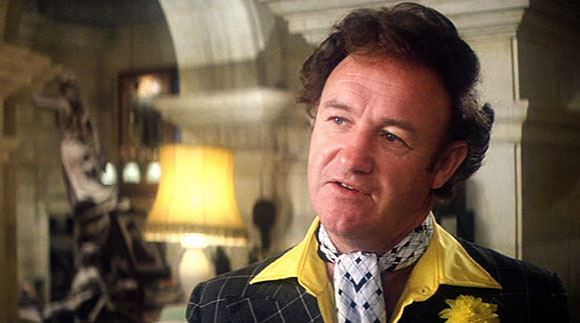
gene-hackman-lex-luthorRich people make great villains.  When superheroes need a super villain, they look for bad guys with means. Whether it’s Cruella de Vil from 101 Dalmatians or Gene Hackman as Lex Luthor, we love to hate rich people.

That includes doctors, with a special class for Eye Doctors and Radiologists.

Heroes have money too, sometimes. It creates a pseudo-character flaw. Tony Stark renounces his arms-developer past and funnels profits into high-tech vigilantism. Bruce Wayne inherits wealth, but shuns it seeking penance and meaning in poverty. Reluctantly he pulls on his Batman tights and hunts rich underworld perps as poetic justice.

For many, having money indicates a character flaw, serves as evidence of some nefarious activity or, at the very least, suggests an inordinate love of mammon.

Envy

Society envies doctors for their mythological incomes. Doctors envy other doctors on the same premise, granted with more reason.

Envy is a resentful awareness of another’s good fortune. It arouses spite, a desire to harm the person holding the good fortune we believe they possess. We want their good fortune to end. We want what another person has and resent them for it.

Dante described envy as “a desire to deprive another man of theirs”. For Dante, the envious gain sinful pleasure for seeing others brought low.  See also schadenfreude.

No culture applauds envy, ever. It shares prominence as one of 7 deadly sins thought to be so bad that it caused an unpardonable and total loss of grace.

Institutionalized Envy

A rigid government medical system institutionalizes envy. It offers whiffs to the envious of what they do not have. It provides all sorts of reasons to argue why doctors have too much. It marries envy and a voyeuristic snooping.

Doctors envy higher paid specialties, and the rare MD who bills over $1 million.  Doctors spite their peers. They want to cause them harm.

The general public envies doctors and anyone who bills more than twice what they make. They delight in seeing them attacked by political bullies.

Envy gives us no pleasure at all. We feel sadness at another’s happiness. We feel pleasure only at when our victim suffers.

Price, Costs and Relativity

Like bread in a Russian bakery, the government defined and set doctors’ fees decades ago. They get tweaked now and then, but stand almost unchanged since the 1970s.

Price fixing rests on ‘cost’ to determine price. Cost looks to training, time, effort and skill as proxies to help determine price.

A procedure that took 4 hours, expensive equipment and carried a substantial risk of disastrous outcomes commanded a high fee 40 years ago. Today, the same task can be done in 20 minutes with almost guaranteed results. Doctors can do 20 or 30 in a day with energy to spare. But the fee stays high.

In fact, high fees now dwarf other fees. Years of ‘across the board’ raises give high fees bigger raises. Like feeding a fat cat more based on its girth, the fat cats get very fat indeed.

And the rest of us envy them. We want to make the obese kittens suffer.

Lord of The Flies

Can we see through the haze? Doctors stagger with envy like the most intoxicated journalists at the Toronto (Red) Star. Envy corrupts everyone, doctors included.

We need to admit that price fixing has nothing to do with patients’ ideas of value. Centrally controlled healthcare removes all information about what patients think. We pride ourselves in being completely ignorant of how much patients value different services; how much patients value being brought back to life versus having vision restored.

Re-Boot

We need to start over again with patient benefit at the center. What approach to healthcare turns the interests of every single person towards meeting patient needs?

State funded healthcare can stay in the game, as long as it proves to put patient needs before all else.

Providers who help the most patients, or offer the most valued services, should earn the most. We should not resent someone for providing more care. If some doctors find ways to help tonnes of patients, we should celebrate them. Give them an award, not an extra cut.

Anti-competative agreements harm both consumers and businesses…

— Competition Bureau, Governent of Canada

Price fixing for medical services plus central control must lead to salaries and even more regulation.

Price fixing cannot sustain in a pseudo market where patients can shop for any health service at no cost, and doctors can bill with no way to certify need or benefit.  If we offer patient choice and provider freedom, then we must let patients determine the value (price) they place on each service.

First dollar coverage (‘free care’) and fixed prices necessitate rationing of medical services. It makes utilization impossible to control and spawns bizarre discrepancies in relative income between specialties.

Doctors need to work through their own issues:

  • Do they believe high incomes indicate moral corruption and/or fraudulent care?
  • Do doctors want salaries?
  • Do they maintain faith in price-fixing?

Doctors stand at a crossroads. As Medicare crumbles around them, what do they want? More of the same, or something better?

Healthcare Versus Windmills – Sophie’s Choice?

wind turbinePoliticians confront impossible decisions. Do they fund education or healthcare? Do they fix poverty or illiteracy?

Our leaders live out Sophie’s Choice all the time, one child goes to die and the other lives.

At least that’s what you’re supposed to think.

Meryl Streep won an academy award as Sophie. She chose her son, Jan, for the children’s camp. Her daughter, Eva, went to the gas chambers. Watch the movie.

Healthcare versus Windmills

Premier Wynne and Health Minister Hoskins deserve an award, too. They insist that the only way to pay for teachers and nurses is to cut doctors.

They say doctors got a raise. That’s like saying school enrolment went up so we hired hundreds more teachers, which produced a raise for teachers.

Politicians repeat it so often; we must assume they think voters stupid enough to believe it.

Moral philosophy classes used to be taught using impossible moral dilemmas.

“Suppose a train is approaching 2 tracks and must choose one.

Your only daughter plays on one track, and a school bus full of children sits stalled across the tracks on the other line.

You control a switch to send the train down either track.

The train has no brakes.

Which track do you choose?”

Wynne and Hoskins face a dilemma: cut projects like Wind Turbines, or fund healthcare. But it’s not a moral dilemma. They face a personal dilemma, a challenge of integrity.

Do they admit bad decisions, or do they put a hard cap on healthcare?

Patients want to know. Will the system be there for me when I need it, as I get older? Patients can see that caps on spending won’t hurt immediately. They understand that it will take time.

Arbitration, Not Legislation

Doctors will not act against patients. They will always care for their own. But doctors will not accept more complex, elderly patients.

They cannot.

The province penalizes doctors for seeing more, providing more care. The province claws back doctors’ billing for seeing more patients. The province put a hard cap on medical spending.

We can do better than this. We can build a system that’s great for patients and fair for doctors and nurses. We need to start with patient needs at the center.

  • What will the aging baby boomers need?
  • How can we plan to meet their medical needs?
  • Does cutting doctors now help us meet those needs?

Everyone makes mistakes. Politicians need a wide swath of grace. We’d all screw-up if we were in office. That’s why we elect politicians, not actors. We elect character, not panache.

It is government’s responsibility to get back to table and fix this mess. Get an agreement with doctors.

Doctors cannot strike. They can only take legal action as a proxy for job action. And doctors will do it. We have no other choice. It will take years to settle. Let’s hope it happens before cuts hurt patients. Let’s hope Premier Wynne wakes up and starts funding healthcare versus windmills.

photo credit: news.ontario.ca