

Physician On-Call System: Physicians Fight to GET Called

on-call systemSometimes patient volumes swamp the emergency department team.  Most on-call systems work so poorly, they aren’t worth discussing.  Here’s a great on-call system that actually benefits patients.

If being home is more attractive than rushing in to see hordes of waiting patients, your call system will fail.

Most on-call systems pay a few hours’ worth of income to be available, and a small premium for the first few patients seen.  Physicians weigh the costs and benefits, then try very hard to stay home by being hard to reach, debating whether there’s really a need for extra help, etc., etc.

Tipping point

Hospitals often pay non-physician staff double-time.  They pay operating room staff to come in for a case, even if the case gets cancelled.

Expect to pay physicians double what they would otherwise make on a full shift for coming in on-call.  If they get at least as much as they would make on a whole shift, just for showing up, no matter how short they stay, physicians will fight to come in.  All of a sudden, you’ll find the first or second ring answered, even at 0300.  Put everyone on the on-call list and call through the names in order.  After each call, move the top name to the bottom.

Where does the lottery money come from?

At worst, each member contributes to a pool.  Far better, get additional funds from grants, educational stipends, drug studies, hosting conferences, recruitment funding, or government programs.

Again, you need to pay physicians far more than you would expect to build an on-call system that impacts wait-times and actually benefits patients.  Build a fund.

Activate On-Call System

The charge physician, responsible for ED flow at the time of need, must activate the on-call system.  Charge nurses, administration, and fellow physicians take part in the discussion to varying degrees.  If the team can’t manage, they must call for more help.

Unbalanced incentives could create dozens of calls bankrupting the on-call system.  You need to balance the ease of calling for help with incentives for physicians to work harder and stay late.  Paying out un-used funds from the on-call pool to the overnight shifts provides balance.  

What if MDs refuse to activate the on-call system to save the un-used funds for night shift?

Hold physicians accountable for wait time performance each day.  If certain docs always have longer waits, or often activate on-call, schedule more shifts when they work.

Try it.  MDs will fight to get called in with this on-call system.

(photo credit: dartmed.dartmouth.edu)
10 Ways Leaders Make Hard Work Harder

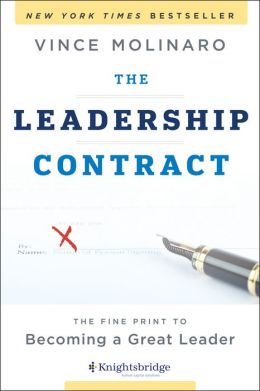
Leaders in the leadership contractVince Molinaro wrote a short leadership book called, The Leadership Contract: the fine print to becoming a great leader. Wiley, 2013.  It’s a quick read, full of great bits of wisdom.  I liked his list called ’10 Ways Leaders Make the Hard Work Harder.’

  1. Getting in over your heads.  Ask for help to prevent your organization being stuck at your level of incompetence.
  2. Confusing rough with tough.  Old-fashioned, army-style leadership values roughness.  Never mistreat people.
  3. Mistaking effort for results.
  4. Feeling like a victim.
  5. Being insecure.  You will come across as wishy-washy
  6. Needing good news.  If you ignore bad news, you get stuck.
  7. Winning at all costs.  Too much competition views everyone as an adversary.
  8. Waiting for permission.  YOU are the leader; get going.
  9. Driven to distraction.  Too many incomplete projects will vie for attention.
  10. Losing perspective. Don’t get mired in the details.

Have you read any good leadership books recently?  Feel free to share the title below!


Patient Interests Before Healthcare Finance

Patient Interests FirstConscientious providers get tied in knots balancing patient interests and healthcare sustainability.

We worry that Medicare won’t have money for the care patients need.

As the point of access for many patients, emergency providers feel pressured to manage system costs and make up for inefficiencies elsewhere, by putting costs before patient interests.

This has to stop.

Backup?

Those who congratulate your parsimony disappear when you get sued for not ordering enough tests, providing enough care, or making patients wait.

After a medical disaster, you get no official support acknowledging overcrowding created an environment for bad outcomes.

Providers experience heart-wrenching cases:  mothers dying shortly after childbirth, toddlers who choke to death, kids clipped in traffic walking to school.

Sick patients create bad outcomes.

Sick patients require split second decisions that lie naked to dissection from the armchair of retrospect.

Emergency departments get ‘helped’ with hours of meetings and external reviews from one bad outcome, but no one – not one single person – wants to discuss egregious overcrowding and unconscionable waits that often play the major role in terrible outcomes.

No one.

Societal conscientiousness needs to be matched with our system leaders’ passion for change.  If bureaucrats want decreased emergency department use, they need to work on system redesign such that patients are attracted to seek care elsewhere.

Emergency providers should not bear the responsibility of rationing care for the whole system.

Focus on Patient Interests

Paradoxically, abandoning obsession with system citizenship ends up refocusing providers on patient interests.  It’s the first step to creating a more efficient emergency department.  Costs per case goes down, patients’ length of stay plummets, and adverse outcomes decrease.  EDs function best when we focus on patient interests and ignore fiscal/system peer pressure at the front line.


So, banish guilt.  If it will help your patients, order tests liberally, welcome them back for care, and put patient interests first.  It will improve the system for patients.


Have you tried to be a good citizen and avoided ordering a test?  Have patients ever come to harm as a result?  Please share your thoughts below.

(photo credit: network.mcmaster.ca Check out McMaster’s post on Geriatrics training.)