What Will Doctors Do Next? OMA MOH Negotiations

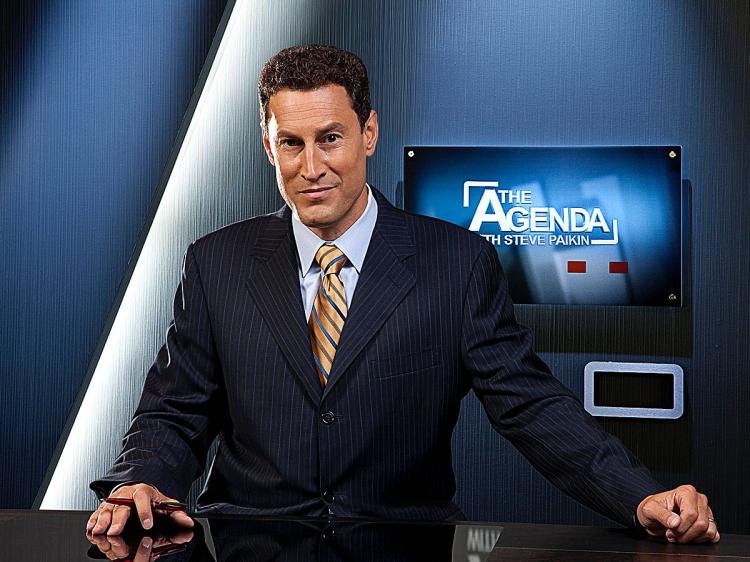
StevePaikin2010_22Television host, Steve Paikin, spoke with Dr. Ved Tandan, Ontario Medical Association President, about the failed OMA MOH negotiations. Paikin asked what happens when government, the payor, makes unilateral cuts.

Usually when these kinds of things break down, Dr. Tandan, the payee does something like withdraw services; like go to Queen’s Park with lab coats and protest signs and raise hell, etc., etc. What do the doctors have planned now?

Tandan said, “The doctors of Ontario are going to do everything we can to minimize the impacts of these cuts. But make no mistake; there will be negative impacts.

See The Agenda (11:38).

What Next?

A prominent pollster in Ontario told a large group of physicians that doctors need to learn how to play tough. They shouldn’t be so nice.

Ineffective action could be seen as inaction.

Physicians need to think about doctors who are working now, those who will follow, and all their patients. If doctors frame fee cuts as nothing but a personal nuisance, they miss the point. Current cuts drain physician funding for the next 15 years or more.

Time to Recovery

In 2012, doctors took a 5% fee cut. Inflation runs between 1.2-2% per year. The Wynne Liberals sliced off 2.65% this month with more to follow. Wynne promises 4% plus an unknown amount of claw backs as ‘reconciliation’ for growth in services.

5% + (2% x 2 years) +4% = 13%

Doctors will see 17% cuts, or more, to gross billings by 2017 including inflation. Physicians’ net income will drop well over 20%.
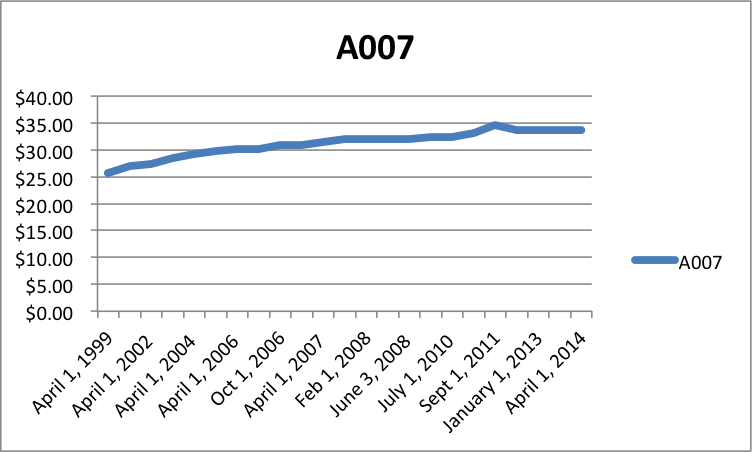
A007How long will it take to fees to recover? Even if we assume a 1% recovery per year, plus 2% inflation, it would take 17 years to recover with 3% raises per year, or 2034. How reasonable is it to expect 17 yrs of 3% raises? The core family practice code, A007, has almost flatlined.


Response vs. Vision

Doctors took a fairly measured, coordinated response so far. Articles, videos, social media and meetings with politicians offer peaceful protest. Should physicians ramp up their response? Should they march to Queen’s Park?

What do doctors want? They probably want the bottomless pit of reconciliation abolished. Docs likely want the indiscriminate program and fee cuts reversed. But do physicians have a vision for fundamental change?

Without system change, we can expect more cuts and tweaks in the future. Political pilot projects within the current framework will raise expectations and then disappoint with unsustainable costs. Four decades make it certain. Dr. Max Gammon, after studying the British National Health Service, said that in

a bureaucratic system … increase in expenditure will be matched by fall in production ….

It’s called Gammon’s Law, or the Theory of Bureaucratic Displacement.

Some doctors want protest but have little appetite for fundamental change. Protesting current cuts while asking for a return to the status quo prolongs the inevitable. If we protest, we need protest with vision. Are doctors willing to consider substantive system change? Is the public ready for it?

Or should doctors shut up and accept a >20% cut to net income?

photo credit: theagenda.tvo.org
Zero tolerance, Zero Empathy?

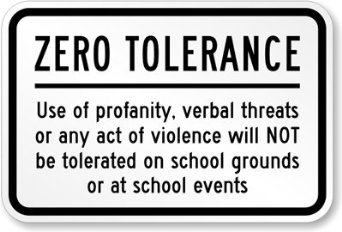
zero tolerance signHospitals and government services like to put large posters up that list all the things they do not tolerate.

  • Abusive language
  • Acts of violence
  • Inappropriate behaviour
  • Harassment
  • Bullying
  • Yelling
  • Profanity
  • Verbal threats

Zero tolerance seems a good solution for all kinds of social problems. Whenever anyone wants to say they really don’t support something, they say they have a zero tolerance approach. Here are some example from the headlines:

Hospital leadership adopts zero tolerance policies to support staff. Policies plus proper doors, panic buttons and modern approaches to security best practices help protect an organization’s most valuable asset.

But for some, zero tolerance means zero empathy.  That angers patients.  Upset patients act poorly and make staff feel unsafe. Staff cry out for stronger zero tolerance, and the cycle continues.

Should professionals, trained at managing the emotions of all kinds of emergency situations, need to have giant posters telling patients what they will not tolerate? Is there a chance that zero tolerance promotes callous and pitiless treatment of patients?

In schools, zero tolerance fosters the opposite approach that behavioural concerns require. In Kicking the Nasty Habit of Zero Tolerance, Julia Steiny reports that some teachers say:

I teach the good kids.  I don’t give the bad kids the time of day.  They shouldn’t be here.

When students need to hear:

I care about you.  It is my job, if for no other reason, to invest in your success…

A recent article in Nursing Times suggests the same thing: Do Zero Tolerance Policies Deskill Nurses? Zero tolerance policies assume that dealing with aggression is not part of a healthcare professional’s job.

Zero Tolerance For Staff?

Instead of advertising what we won’t tolerate from patients, why don’t hospitals advertise what patients won’t have to tolerate from staff? Why don’t we adopt a zero tolerance for staff and post that on huge posters in hospital waiting rooms? We could adopt zero tolerance for

  • Staff talking about vacations while ignoring new patients
  • Sneering skepticism
  • Snide remarks and innuendo
  • Condescension
  • Patronizing remarks
  • Unnecessary delays
  • Being bothered by interruptions
  • Abandoning patients to go on breaks
  • Profanity
  • Anger

The worst of zero tolerance attitude tends to seep in and change culture. It takes huge effort to maintain excellence, teamwork and a positive attitude . Ignore excellent behaviour for just a short time and culture risks becoming callous, pitiless, dismissive and cruel.

Healthcare requires professionals trained to handle patients at their worst. Even nice, polite, otherwise normal people can scream and swear when in unbearable pain. Professionals know this. Professionals pay attention to safety, but then they manage bad behaviour with grace and magnanimity.  Zero tolerance posters should be beneath them.

[photo credit: amazon.com]


Family Health Teams – Ideal or Extravagant?

Family Health Team Halton HillsSome patients get special care in Ontario. Twenty percent of patients have priority access to extra, insured services with very short wait times. Government apparently spends 60% more for the privileged care. If you roster with a Family Health Team, you could get some too.

In Family Health Teams, social workers handle mental health concerns.  Pharmacists review complex medication lists and track INRs if required.  Dieticians help with diabetes, high cholesterol or obesity. Nurses offer smoking cessation programs where they counsel, support and follow patients trying to quit. And much more.

Family Health Teams (FHTs) include family doctors, nurse practitioners, nurses, social workers, dieticians, pharmacists, support staff, administrators, other professionals and sometimes part-time medical consultants.

The Ministry of Health website says:

Family Health Teams were created to expand access to comprehensive family health care services across Ontario. Since 2005, 184 Family Health Teams have been operationalized through five waves of implementation, with the last 50 implemented in 2011/12. There are currently over 3 million Ontarians enrolled in Family Health Teams in over 200 communities across Ontario.

Getting a spot in a FHT feels like flying first class: privilege, access and priority.

Family Health Teams have complex needs. A few of the issues include:

  • An additional layer of bureaucracy
  • Staff reporting changes (to admin vs. MD)
  • Sharing resources can cause strain – especially if FHT has multiple sites
  • MD leadership is largely unpaid
  • Multiple meetings
  • Complex governance: especially if aligned with hospitals, LHINs and teaching programs
  • Complex legal issues and contracts
  • IT infrastructure and maintenance
  • Attempts to contract MDs to another bureaucracy
  • On-call requirements
  • Continual checking and oversight of scheduling and care
  • Monitoring of staff activities
  • Patient complaint processes
  • Quality committees
  • Forms committees

Bureaucratic Method

Like many issues in health, everyone agrees on the general outcome. We all want high quality care designed around patients’ needs. But we disagree on how to get it done.

Politicians believe in bureaucracy. They place their faith in central control. They can take credit for projects that they control from the top. Politicians need special projects like FHTs to demonstrate how they’ve added value to healthcare.

Bureaucrats believe physicians are mostly incompetent at managing primary care. They interpret doctors’ pleas for necessary services as greedy requests for more income. Bureaucrats think they can arrange better healthcare than doctors, if they manage and control it themselves.

We already have government owned, staffed and managed practices in Ontario. There’re called Community Health Centers. They work very well in specific communities but seem too expensive to offer everywhere.

FHTs provide an attractive way to offer care. No one debates that. If we spend 60% more for any service, we expect some improvement. We need to ask whether we could get the same or better outcomes for the same investment.

A Better Way

Nothing beats the efficiency and personalized patient attention offered in a small clinic. Even large clinics function best when broken into teams or pods so staff can develop relationships with patients and with each other. Primary care is a service, not a product. Great service is personalized, local, prompt and meets individual needs.

Instead of building bureaucratic monoliths, governments should consider giving extra funding to family doctors. Let small teams of physicians show how funding changes outcomes from a baseline. Let them hire and build allied teams. Government could reward high performers with even more funding for new, creative solutions.

Politicians give family doctors low fees and then complain about less than ideal care. Those of us working in FHTs love them but know they’re probably too expensive to offer everywhere. Instead of trying to reinvent primary care, politicians might consider letting front line professionals prove how well they can provide care free from bureaucratic baggage. I suspect it would improve patient care for much less cost.

photo credit: haltonhillsfht.com