
Medicare Changes Doctors

Swimmer“She’s in the pool from 5 to 7 every morning and for another 2 hours after school,” Mom said. “She trains six days a week and has straight A’s. I think she studies too much.” Mom frowns and smiles with concerned pride.

Top athletes structure every detail of their lives around improving performance with physical development and mental toughness.

Medical training shapes physicians’ character as much from ‘The Hidden Curriculum’ as what gets taught formally.  The Hidden Curriculum includes all the assumptions and beliefs that define the culture of medical care. Inevitably, the medical profession, including physicians’ attitudes, gets shaped by the medical system.

Medicare changes doctors in ways that may or may not benefit patients. For instance:

  • When government pays the medical bills, docs tend to focus on what government wants, not patients’ wants.
  • When government controls healthcare, doctors care less about the system, how it runs.
  • If medical care is ‘free’, it becomes only correct or negligent. ‘Value added’ holds less meaning.
  • Doctors insulated from patients’ ability to pay tend to worry less about costs.
  • With increased regulation, doctors avoid regulators’ wrath by ordering more tests. Doctors worry less about costs and more about avoiding trouble.
  • Medicare makes doctors appreciate payment from government instead of requests for care from patients. Doctors become thankful to government, less beholden to patients.
  • Medical need is what gets reimbursed. Patients’ needs come after need as defined by providers and bureaucrats.
  • Third parties define when and where patients should seek care, and from whom. Patients’ opinions are devalued.
  • When government pays for all care, reimbursement becomes an expectation from government instead of a payment from grateful patients.

Medicare impacts medicine like spice changes sauce. It tastes different but does not change marinara to alfredo.

Most doctors hate thinking about a patient’s ability to pay during a clinical encounter. Physicians see cost insulation as a major reason to love Medicare. At the same time, Medicare supporters campaign for doctors to take responsibility for spending, to take accountability for healthcare costs. They want doctors to feel the financial pain of their decisions and focus less on churning patients through the clinic.

Built on the Past

Athletes can cheat for a few days and still perform better than the rest of us. But eventually lifestyle influences performance.

The first 10 years of Medicare made Canadians proud. Politicians claimed success for great legislation. Socialists claimed a win for collectivism. But as Medicare crumbles, politicians blame everything other than legislation and political outlook.

The golden years of Medicare brought outstanding results because of the character and culture into which it was placed. Like giving an athlete a new training program, Medicare introduced a whole new set of assumptions about need, value and who is the real customer.

To use another analogy, introducing Medicare in the 1960s is like a toddler placing her teddy bear on top of a stack of blocks. Her tower looks amazing for a second. However, her destabilized creation inevitably crushes all her work.

Looking around for reasons why Medicare under performs is like asking why the teddy bear fell or why an athlete fails after years of not training. Medicare stood on the success of character built over years before. Medicare introduced a new element into a complex system that modified the fundamental character of the whole.

Medicare changes doctors and patients. It altered the medical profession. Does it still bring the change that patients need?

photo credit: telegraph.co.uk
Doctors Won’t Fight The Nanny

nanny stateSteve Paikin, host of TVO’s The Agenda, wrote a blog: Doctors no longer have all the power in Ontario’s Health Care.

He writes that the Ontario Medical Association used to stand and fight in the 80s and 90s. Earlier, he asked the OMA president, “What do the doctors have planned now?” I blogged about it here.

Paikin assumes most doctors do not vote Liberal. I suspect he’s wrong.

Physicians tend to support the party in power like most other voters. Doctors want stability and predictability. They like big government handouts.

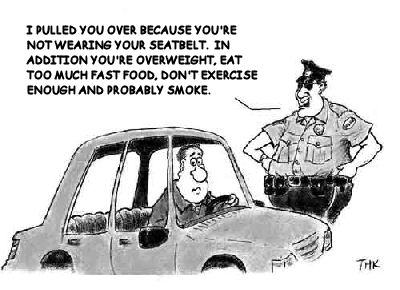
Beyond the practicalities of clinical care, many doctors hold idealistic notions about society. They ask the state to legislate healthy behaviours. Diabetes experts lecture about menus, food choices in supermarkets and even neighbourhood design. They believe government should plan society to promote health. Many doctors call for levels of state control seen only in totalitarian regimes.

Physicians should re-examine their politics. If they support:

  • Expanding government size and control
  • Government ownership and control of services and production
  • Increased wealth redistribution
  • Increased handouts with little attention to warrant
  • Complete insulation of society from risks associated with personal behaviour
  • State help for bad business outcomes
  • Penalizing professionals for hard work
  • Unearned handouts

Then physicians should accept their cuts and be quiet. Wynne’s attack on doctors follows from her political philosophy.

On the other hand, if doctors support

  • Responsible spending
  • Individual choice (e.g., telephone, air travel, postage, education)
  • Self-reliance for things most individuals can handle
  • Government doing what only governments can do (e.g., military, courts and banking)
  • Letting voters direct tax dollars (e.g., remove hospital block funding, school vouchers)
  • No handouts without some effort except for those completely incapacitated
  • Not insulating people from all the risks of their choices about debt, behaviour and lifestyle
  • That professionals should control their workplaces and practices, not bureaucrats

Then physicians should fight.

They could start a human rights challenge of the CPSO ban on physician job action. They might challenge the legality of the ban on physician billing outside of Medicare. They should ‘raise hell’ as Paikin mentioned.

Do doctors refuse to fight because they support the nanny state and want more of it? Doctors won’t fight the party they love.


Doctors and Medicare: Worker-System Mismatch?

american sniperMedical students fight to do disgusting procedures. Most people find some parts of doctoring attractive, but other parts look unimaginably repulsive.

Medicine requires unique people. Doctors carry certain assumptions long before they start medical school. Training deepens those ideas and hones new attitudes and behaviour.

Here are some ideas doctors believe about

Work:

  • Hard work pays off.
  • Delayed gratification does too.
  • Risk and sacrifice determines rewards.
  • Reward must be earned.
  • Excellence exists; all workers are not identical.

Knowledge:

  • Knowledge grows and builds on the past.
  • New information should inform current practice.
  • Innovation breaks some rules.
  • We should follow where the evidence leads.

Character:

  • Actions have consequences.
  • Self-reliance – you write your own exams and perform your own lumbar punctures.
  • Confidence – make a decision and act on it even in the face of limited information.
  • Self control – keep emotions in check, be calm in crisis, practice decorum.

Whether by nature or training, all professionals possess a unique bent. Professionals work best in places that presuppose the values and tendencies that contributed to them becoming those professionals in the first place.

Workplace design follows provider function.

Medicare

Politicians designed Medicare to meet political ends, not universal care. The Canadian healthcare monopoly lags far behind other universal healthcare systems (Commonwealth Fund Report). Ideas and values follow the presuppositions of our system so that:

  • Politicians disparage hard work as greed.
  • Academics promote rigid guidelines.
  • Administrators create definitive policies.
  • Regulatory colleges punish rule breaking.
  • Non-medical workers demand respect but defer risk.
  • Risk does not increase reward. Government pays similar fees regardless of age and complexity.
  • Promotions follow seniority, not performance (for non-medical staff).
  • New information matters less than stakeholder influence.
  • Ideology trumps evidence.

Doctors and Medicare

We don’t hire sumo wrestlers as jockeys or morticians as cheerleaders. We want stockbrokers to think and act differently than kindergarten teachers. We hope firemen follow fewer rules than building inspectors.

Every decade politicians and bureaucrats work to reshape Medicare in their own image. Eventually, the system cannot tolerate the professionals it was created to fund.

What do you think? Are doctors square pegs being forced into the round hole of state run healthcare? Do patients need different doctors or a different system?