
Family Practice For Sale – $150k

CirrusOld doctors used to beg new graduates to take over their practice in the 1990s. They offered free rent for a year, all office supplies, 3000 patient charts, a devoted staff and a great parking spot. Some even threw in ownership in a medical building.

They begged new docs to care for patients they had grown to love like family.

But everyone knew that accepting a ‘free practice’ meant slavery. Sorting out complex patients for 80-100 hours per week just to make payments on student debts and mortgages was not worth it.

Middle aged doctors used to sneer in envy. They had paid $200-300 thousand for their practice just 10 years prior. They had assumed that after 20-plus years of student living, massive debts and delayed family life they would accept huge practice debts just to start billing. House, car, student loans….what was a few hundred thousand of practice debt to take on in your early 30s? They had no clue about money.

It all changed in the 1990s.

Governments turned family doctors into a scarce resource.  The glut of doctors predicted by the Barer-Stoddart report turned out terribly wrong.  Government closed medical school spots and created massive doctor shortages. On top of that, slashed fees though the social contract years in the 1990s forced doctors to seek work in emergency departments, hospitals, walk-in clinics – anywhere but in practice. It left nearly 2 million Ontarians without a family doc.

Pressured by voters and flush with cash from federal health transfers, Ontario poured money into Family Practice starting in 2004. Government opened medical training spots. Doctors could finally make a case to open practices. Students started ranking family practice as their first choice again. Over 1 million unattached patients found doctors by 2012.

But it ended quickly.

Premier Wynne blocked entry into family practice this spring and cut fees at the same time. She created an artificial shortage of places to work. She turned a patient roster into a commodity again but for all the wrong reasons.

Family Practice For Sale

Cirrus Consulting Group serves medical practices. Josh, from Cirrus, commented this morning under the Medical Residents Talk About Cuts post.

“As I have read many of the comments going back and forth I felt compelled to provide some insight. I work for a management consulting firm in midtown Toronto, Cirrus Consulting Group, that specializes in everything being discussed here. We work with individuals and groups, both in FHG’s/FHO’s/FHT’s and FFS to ensure that their practice is running efficiently and effectively. We often find that family physician in Ontario are not paying close enough attention to their ‘business’. We work closely with the physicians and their staff to make sure that they are being paid appropriately for the care they are providing. As a boutique firm, we are able to provide hands on attention to all our clients with in person meetings and access to our team of experts at all times.

I would encourage all of you that are practicing family medicine in Ontario, regardless of your payment model, to check out our website and get in touch with either myself or another member of our team to speak about your situation and ways in which Cirrus can assist you.

To get into a little more detail about the topics above – we are currently seeing a significant amount of interest for the purchase and sale of family practices in Ontario. As it was mentioned, there is value now for a roster of patients and a spot in a FHO, whereas before, anyone could join so it didn’t make any sense to purchase. As for value, purchasing physicians are guaranteed income for the first 6 months after taking over and in our experience, this relates to the average sale price of about $150-200K, even though I would expect the sale price to be higher with such demand.

Overall, Cirrus can help with all aspects of your practice from the start of your career with income projections and setup, to the end of your career with practice valuations and retirement. I look forward to speaking with many of you and your colleagues about your individual situations and how Cirrus can help optimize your practice.

Please check out – http://www.cirrusconsultinggroup.com and my direct email is jsteinberg@cirrusconsultinggroup.com

Practices take work to build and have intrinsic value. But their current value rests on the wrong reasons.

Practices should be valuable because doctors had to work to build them. Practices should not have value because governments ration spots to practice. Ontario has it backwards…while patients wait with little choice in who they get to see.

Government cannot manage healthcare by itself. Selling spots in family practice is only the beginning. Patients will soon find they have to hang on to their family doctors for dear life or risk not finding a replacement.

Politicians should be held accountable for their decisions, not just at election time. Let’s hope Premier Wynne and Minister Hoskins start working with doctors instead of against them soon.

photo credit: www.cirusconsultinggroup.com
Medicare Grows Up

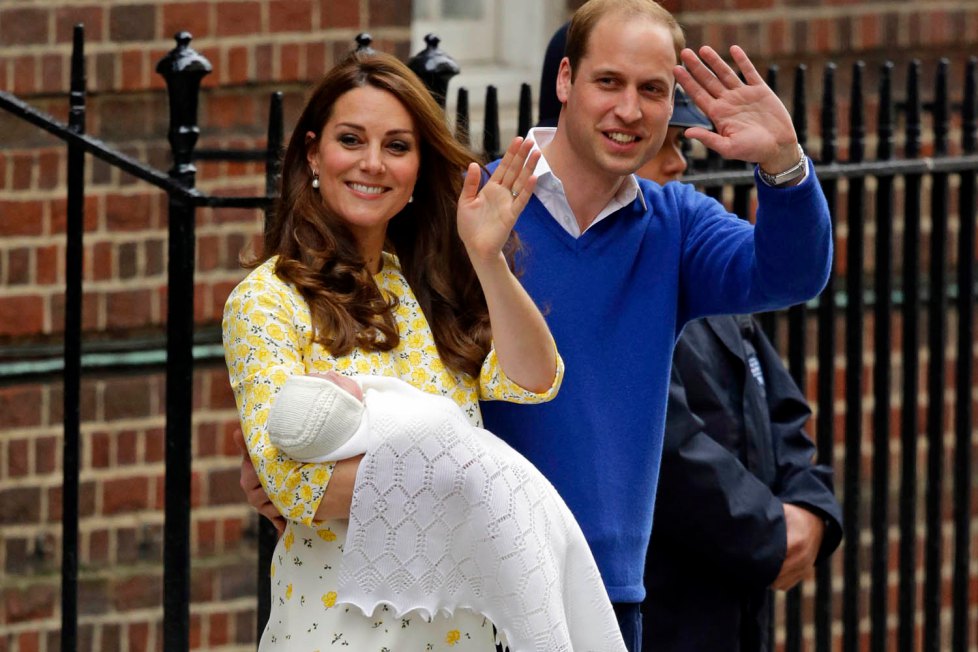
Britain Royal BabyParents love growth charts. We could sell tickets to show moms where their princess lands on the pink curve. After 18 months of watching dots follow an arc, parents get distracted. The growth curves flatten, pudgy dimples disappear and kids get complicated.

Canadian Medicare has grown up too. The adorable baby born in the late 1960s looks different from the troubled teen of the 1980s and 90s. The current, adult version of Medicare looks almost as different again.

But people can’t see it. Only 4% of us ever need lifesaving medical wonders. 96% of us go on living in ignorance. All that matters is the myth: free universal care for all.

I. The Perfect Baby

Canada became the envy of the world in 1968-1971, with good reason. We built a program, with all party support, to fund hospital and physician costs. The insurance phase protected people from financial ruin. People could finally invest in a business or risk a career change without worrying about their health. It was the golden age of Medicare.

The insurance phase lasted barely 10 years. Dour economists warned, and were proved right, that demand for services always moves inversely to price. Drop the price; demand increases. Drop the price to zero, and demand increases infinitely.

On top of that, technology begged to satisfy the demand. Since anything that might benefit patients would more than likely get funded, industry responded eagerly to satisfy the insatiable demand for the new, latest and most advanced care possible. Doctors cared nothing about cost. They could wave their golden pens and prescribe every possible investigation and treatment without any clue – absolutely no inkling – of cost.

Government paid for healthcare and asked very few questions.

II. Adolescence – Health Services

Like a teenager spending her first pay-cheque at the mall, everything became a necessity. Medicare morphed from an insurance program into a payment program for routine services. Medicare stopped protecting against financial ruin. It became payment for the routine costs of simple concerns.

  • What do you suggest for this rash?
  • My mom has high cholesterol, do you think my 10 year old does too?
  • Can you suggest something for sleep?
  • My neck still hurts; what else can be done?
  • My tummy stopped hurting, so I just skipped the evening appointment you booked for me.

Spending soared. Politicians took notice and tried to control the bloodshed in the 1990s.

They faced a choice: cut services or cut payment for services. No one gets re-elected cutting services. But every politician wins votes by attacking the fat cats that voters envy.

Politicians cut extra billing first. Doctors used to make overhead payments by charging a little extra from those able to afford it.

Then governments cut billing codes. Actually, they clawed back total billings all through the 1990s and refused to increase fees above inflation.

Who could blame them? They had to control costs. They focused their fight on the price and quantity of services. They worked to shift costs onto doctors. Why should government pay for the bottomless pit of healthcare costs?

III. Medicare grows up – What is Healthcare?

But even at $33 per visit before subtracting overhead, doctors found ways to meet patient demands. They shortened visits to 1 problem and ordered all the tests and referrals patients loved. Clearly, government had to do more. If doctors couldn’t limit patient demand to bare necessity, then politicians would regulate it for them.

The last phase of healthcare finds bureaucrats consumed with redefining what constitutes a medical service. Payers take a special interest in identifying, codifying and prescribing ideal care. Debates irrupt about what determines ethical or appropriate healthcare. Providers face regulations and control. Experts redefine the practice of medicine. Big data will turn micromanagement into a fine art.

Governments make patients wait in an effort to ration care. Doctors get deployed away from treating disease and onto prevention. Disease costs money. We should focus on preventing costs in the first place.

Healthy people cost less; therefore we need to keep people healthy. But governments do not support prevention out of altruism. They promote it because it saves money. It keeps you out of hospital.

In phase III, government usurps control of patient care.

Who decides?

Healthcare costs a fortune. If cost control means choosing between care and money, who should make that decision? Doctors, government or patients? As Medicare enters its senescence, who do you think should make decisions about your health?


I leave you with a thoughtful note shared by a rural doc after 30 years.

“When MOH started the APP’s [alternate payment plans to replace fee for service], it was supposed to provide stability and simplicity to rural practice, as well as support excellence, continuous professional development, and attract quality physicians.

They did that for a few years, but then started into the engineering phase, providing complex formulas to reward desirable behaviours and extinguish undesirable ones. But the efforts possibly didn’t work well, as they kept changing them, making more complex methods to try to get doctors’ focus away from patient care and into something like going to the grocery store where you can only get a fair price by buying the right combination of goods on the right day.

It’s like a huge on-line multi player game, where various politicians and the bureaucrats they appoint log in for long enough to bump themselves up to the next level, and then bail out. Meanwhile there are the same docs and the same patients trying to work with it.

Schoolteachers give me the same story of trying to do what they were trained to do despite the ever changing array of government-ordained improvements. And every other businessperson who is trying to make an honest living and do something worthwhile at the same time.

Government is a parasite, which is re-affirmed every election by about 25% of voters who actually believe their ideology will be represented, and another 25% who feel obligated to vote for something, while the other 50% can’t be bothered.

But it won’t go away, because whenever something displeases the masses, another spark is struck for the government to do something. Those sparks are fanned by the media who like to be on board with whatever is popular, and then fanned again by the opposition parties who feel their role is not to govern but rather to appear to hold the feet of the party in power to the flames of popular dissatisfaction.”

photo credit: nypost.com

Normal Doctors – We Need You!

SurgeryMost doctors hate politics and bureaucracy. Doctors do not compete for limited spots in medical politics the way students fight for spots in medical school. Doctors who serve in politics are different. They have unique tastes.

If you are a normal doctor, or you happen to know one, please encourage them to volunteer time in medical politics. Tell them to go to a provincial association meeting or apply for a spot as delegate to the Canadian Medical Association (CMA) council next year.

Normal Doctors

Normal working doctors usually cannot spare the luxury to debate health policy. They do not question why the system functions as it does. They can’t afford the time.

Normal doctors might have between 5 and 25 years of experience. They aren’t new grads, and they aren’t ready to retire. They take care of patients and fill call schedules. They manage offices and staff, spouses and children/dependents. Normal doctors don’t have much time to volunteer, teach, write blogs, Tweet or do all the things that distract some of us.

Medical associations need normal doctors. 

We need mid-career physicians who wouldn’t otherwise be involved. We need to hear from the silent workhorses of healthcare.

Provincial associations always attract a group of doctors frustrated with government meddling in clinical practice. They demand answers to illogical rules and regulations that ruin efficiency and harm patient service. These doctor-businesspeople end up injecting a bit of sanity into discussions about high-minded political debate. But they rarely attend national meetings.

Associations must communicate something that regular physicians can support. National associations must speak for Canadian doctors, not just those who apply to be delegates to annual council meetings.

After periods of questionable relevance, all of a sudden the CMA has become critically important, even though many doctors do not belong to the organization. The following issues demand nation attention:

  • Bullying by provincial governments
  • Authoritarian regulatory colleges – a coast-to-coast push to dictate physician behaviour; starting in Ontario and Nova Scotia
  • Failed negotiations
  • Redefining medicine from “Do no harm” to “Cause death, if patients request it.”
  • Unchanged patient wait times
  • Seniors’ care
  • And much more

We need regular doctors to provide relevance and focus, not just dreams and idealism. We need practical working doctors; people who’ve battled through years of uncoordinated, bureaucratic, over-regulated care. We need you to keep us grounded on patient service, patient need.

The latest phase of Medicare finds governments and courts defining what it means to practice medicine, what defines good care. We need professionals who practice great care everyday to help guide the change. If we don’t get your input, regular doctors might not recognize medicine tomorrow.

photo credit: ca.news.Yahoo.com